


Technology Update
Apple Is 8 Years Late? China's Royole Launched a Foldable Phone Back in 2018
/index.php
Crypto News - Posted on 21 October 2025 Reading time 5 minutes
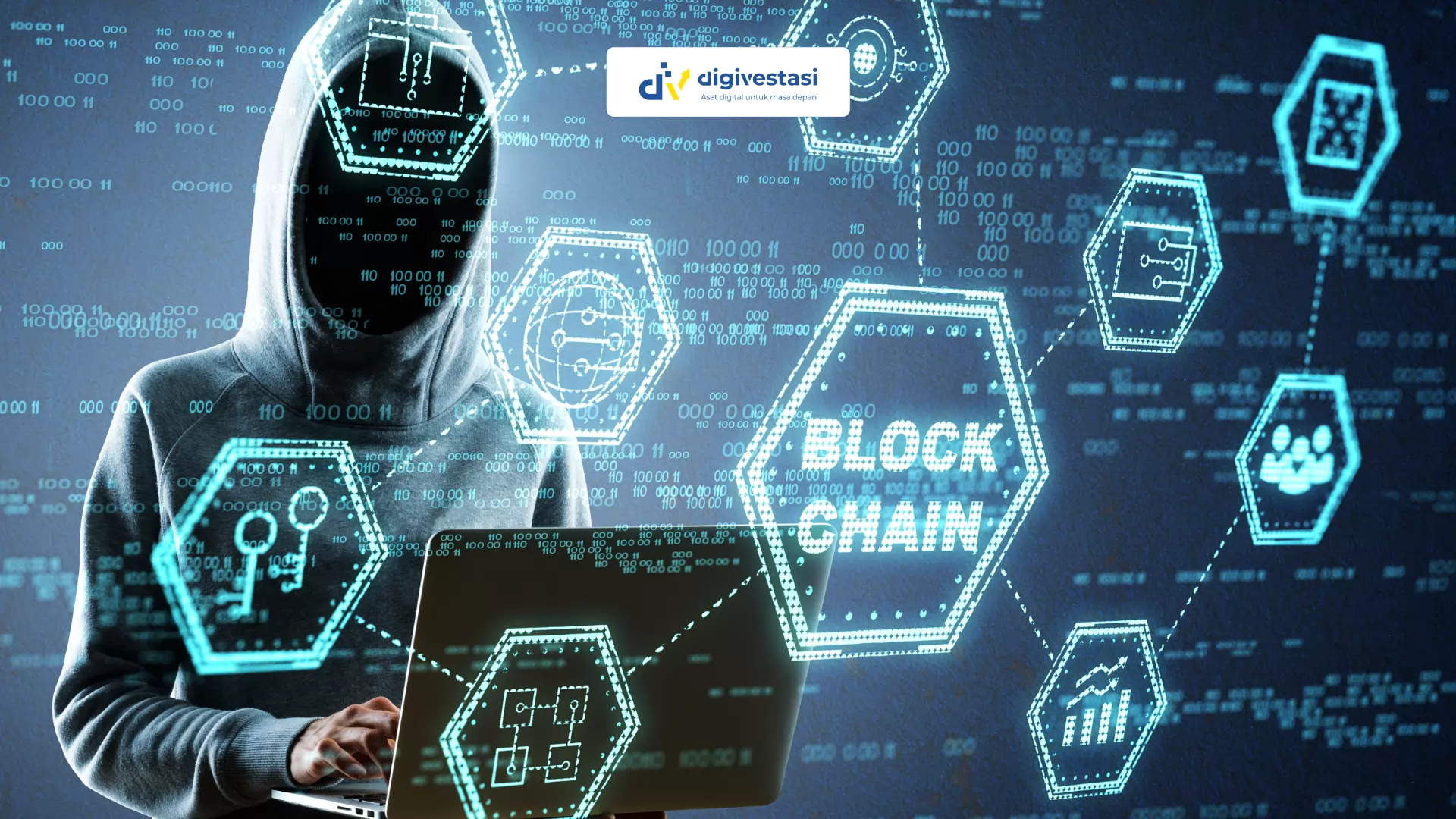
Understanding Blockchain: The Foundation of the Digital Revolution in the Crypto World
In recent years, the term blockchain has increasingly appeared in various contexts—from financial news and government policies to technology startup projects.
However, behind its growing popularity, many people still do not fully understand what blockchain technology actually is and why it is considered the greatest digital revolution since the internet.
This technology is not merely the foundation of Bitcoin or Ethereum, but it also serves as the basis for thousands of other innovations such as NFTs (Non-Fungible Tokens), DeFi (Decentralized Finance), and modern digital identity systems that are now being adopted by various institutions around the world.
Definition of Blockchain and How It Works
In simple terms, blockchain is a digital ledger that records all transactions in a transparent, permanent, and decentralized manner.
Unlike traditional financial systems that rely on centralized servers, blockchain stores data across thousands of computers around the world—known as nodes.
Each transaction is recorded in a block, which is then linked to the previous block to form a continuous chain of data—hence the term blockchain.
According to a report by IBM Blockchain, this technology is built on three fundamental pillars:
Transparency – all transactions can be publicly verified.
Security – each block is protected by advanced cryptography.
Decentralization – no single entity can alter the data without the consensus of the majority of the network.
These characteristics make blockchain virtually impossible to manipulate.
Meanwhile, CoinDesk explains that blockchain enables trustless transactions—transactions that do not require a trusted third party such as a bank or notary, because trust is replaced by code and network consensus.
Types of Blockchain
To fully understand the blockchain ecosystem, it is important to know that the technology exists in several different forms, including:
1. Public Blockchain:
Open to anyone and accessible by the public. Examples include Bitcoin and Ethereum.
2. Private Blockchain:
Managed by a specific organization, usually for internal corporate use. An example is Hyperledger Fabric.
3. Consortium Blockchain:
Jointly managed by multiple organizations or institutions, such as those in the banking and logistics sectors.
Interestingly, blockchain is now being used beyond the crypto industry.
For instance, the Government of Bhutan is testing a national digital identity system built on the Ethereum network, marking a significant step toward the use of blockchain for public administration and digital governance.
First Steps for Beginners
For those who are new to blockchain technology, there are several simple steps to start learning:
Take free online courses on educational platforms such as Binance Academy or CoinMarketCap Learn.
Experiment with digital wallets (wallets) on a testnet, such as MetaMask, to understand how blockchain transactions work without financial risk.
Read the Bitcoin whitepaper written by Satoshi Nakamoto, to grasp the core concepts of decentralization and the philosophical foundation of the trustless digital system.
For students and young professionals, learning the fundamentals of blockchain can be a valuable investment in future skills, given the increasing demand for experts in Web3, cryptography, and distributed systems.
Beyond Technology: A New Economic Movement
Blockchain is not only about financial innovation it represents a social movement toward a more open, transparent, and inclusive economy.
Sharing knowledge about blockchain within digital communities and educational forums is an essential step to accelerate responsible adoption.
As Vitalik Buterin, the founder of Ethereum, once said:
“Blockchain is the fundamental foundation of the modern crypto world — a system that enables transactions without intermediaries, data that cannot be manipulated, and limitless innovation.
Understanding this technology early on not only opens opportunities for digital investment and careers but also serves as a gateway to the global transformation toward a trust-based digital economy.”
What do you think about this topic? Tell us what you think. Don't forget to follow Digivestasi's Instagram, TikTok, Youtube accounts to keep you updated with the latest information about economics, finance, digital technology and digital asset investment.
DISCLAIMER
All information contained on our website is summarized from reliable sources and published in good faith and for the purpose of providing general information only. Any action taken by readers on information from this site is their own responsibility.
SHARE
VIEW


