


Technology Update
Apple Is 8 Years Late? China's Royole Launched a Foldable Phone Back in 2018
/index.php
Bisnis | Ekonomi - Posted on 22 April 2026 Reading time 5 minutes
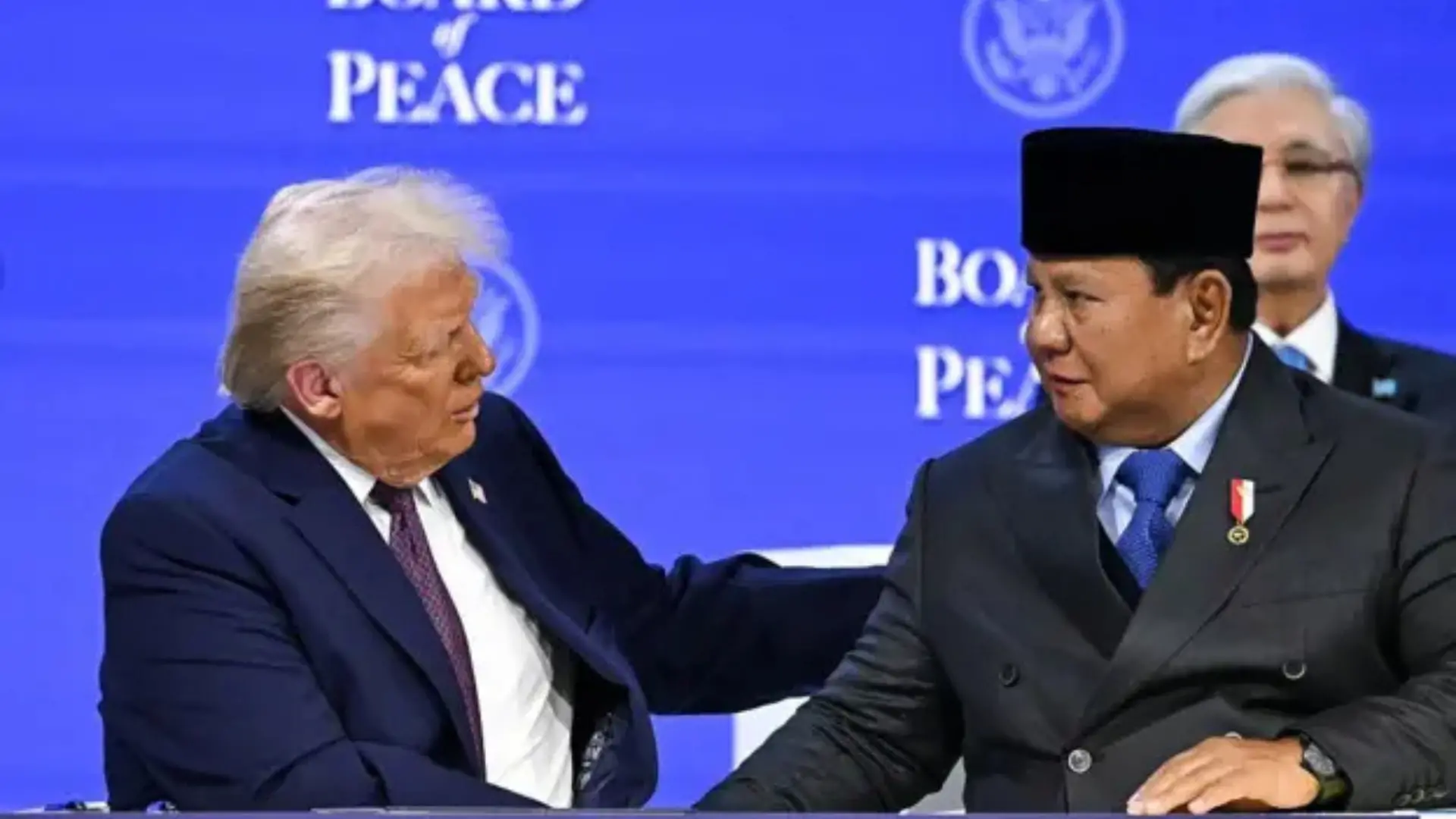
One of the defining features of Indonesia’s foreign policy under President Prabowo Subianto is its growing closeness to the United States. Several agreements have been reached between the two countries, although not all have been positively received.
In one instance, Prabowo, dressed in a suit and tie, was seen making a phone call using his mobile device on loudspeaker. He spoke with Donald Trump and congratulated him on winning the 2024 U.S. presidential election against Kamala Harris.
Prabowo expressed his intention to meet Trump wherever he might be, but his official duties prevented that plan from materializing. During the nearly three-minute conversation, Prabowo appeared to smile and laugh several times, especially when receiving compliments from Trump.
Trump described Prabowo as a respected figure and praised his achievements in Indonesia, including his English proficiency. Prabowo responded by mentioning that he had undergone military training in the United States at Fort Bragg and Fort Benning in the 1980s.
Toward the end of the call, both leaders exchanged commitments about future meetings. Trump expressed interest in visiting Indonesia, while Prabowo was encouraged to contact him anytime and agreed to meet Trump’s son-in-law, Jared Kushner, again.
More than a year later, at a Board of Peace forum, Trump once again mentioned Prabowo, describing him as an intelligent and strong leader, even stating that he would not want to face him.
Despite such praise, several formal agreements between the two countries have drawn public criticism. Indonesia proceeded to join the Board of Peace initiated by Trump, despite opposition from early discussions.
The Board is an international forum aimed at resolving the Israel-Palestine conflict, including reconstruction and stabilization efforts in Gaza. Critics argue that Indonesia’s participation signals a shift away from its firm support for full Palestinian sovereignty, compounded by the high membership fee of US$1 billion.
CSIS researcher Muhammad Waffaa Kharisma views the Board as hierarchical and dominated by the United States, potentially serving as a political tool for U.S. interests in the Gulf region. He also noted that Indonesia’s participation could limit its diplomatic flexibility.
Additionally, the Indonesia-U.S. trade tariff agreement has sparked debate. Under the February deal, Indonesian exports face a 19% tariff, while certain goods receive zero tariffs. Meanwhile, Indonesia has eliminated import tariffs on more than 99% of U.S. products.
The think tank CELIOS argues that this agreement disadvantages Indonesia by increasing the risk of import surges, weakening the trade balance, and putting pressure on the rupiah. Domestic industries may also suffer due to limited technology transfer and the removal of local content requirements.
Tia Mariatul Kibtiah from Bina Nusantara University described the deal as harmful to the public, arguing that it disproportionately benefits the United States.
Another issue involves the proposed blanket overflight access for U.S. military aircraft. The Indonesian government is still reviewing the proposal while emphasizing that national sovereignty remains a top priority.
In practice, such access would allow U.S. military aircraft to enter and exit Indonesian airspace with minimal notice and potentially use local airbases under certain conditions.
International law expert Aristyo Darmawan warned that granting such access could weaken Indonesia’s control over its airspace and potentially entangle the country in regional conflicts.
Historically, Indonesia-U.S. relations have been shaped by mutual interests. During the Cold War, the U.S. feared Indonesia might fall under communist influence, particularly under Sukarno’s leadership, which maintained a neutral stance.
The U.S. undertook various measures, including CIA involvement, to counter this influence, ranging from political intervention to support for regional rebellions, though these efforts were not always successful.
Political tensions escalated during the 1965 events, followed by mass killings of individuals linked to the Communist Party, where U.S. involvement reportedly included intelligence support.
Under Suharto, Indonesia-U.S. relations strengthened significantly, marked by foreign investment and military assistance. However, this closeness also brought consequences, including involvement in the Timor-Leste conflict.
After the reform era, relations continued under successive presidents with varying approaches. Under Prabowo, foreign policy appears to lean more toward the United States.
Analysts suggest this approach may weaken Indonesia’s bargaining position and challenge its long-standing “free and active” foreign policy principle. Meanwhile, the U.S. has strategic interests in keeping Indonesia from aligning too closely with China.
Despite this, Prabowo insists that Indonesia remains committed to a non-aligned and independent foreign policy.
However, some observers argue that recent policies indicate a growing dependency on the United States.
Looking ahead, Indonesia-U.S. relations are expected to become increasingly complex, as major powers tend to demand more from their strategic partners.
Source: bbc.com
What do you think about this topic? Tell us what you think. Don't forget to follow Digivestasi's Instagram, TikTok, Youtube accounts to keep you updated with the latest information about economics, finance, digital technology and digital asset investment.
DISCLAIMER
All information contained on our website is summarized from reliable sources and published in good faith and for the purpose of providing general information only. Any action taken by readers on information from this site is their own responsibility.
SHARE
VIEW


