


Technology Update
Apple Is 8 Years Late? China's Royole Launched a Foldable Phone Back in 2018
/index.php
Bisnis | Ekonomi - Posted on 19 May 2026 Reading time 5 minutes
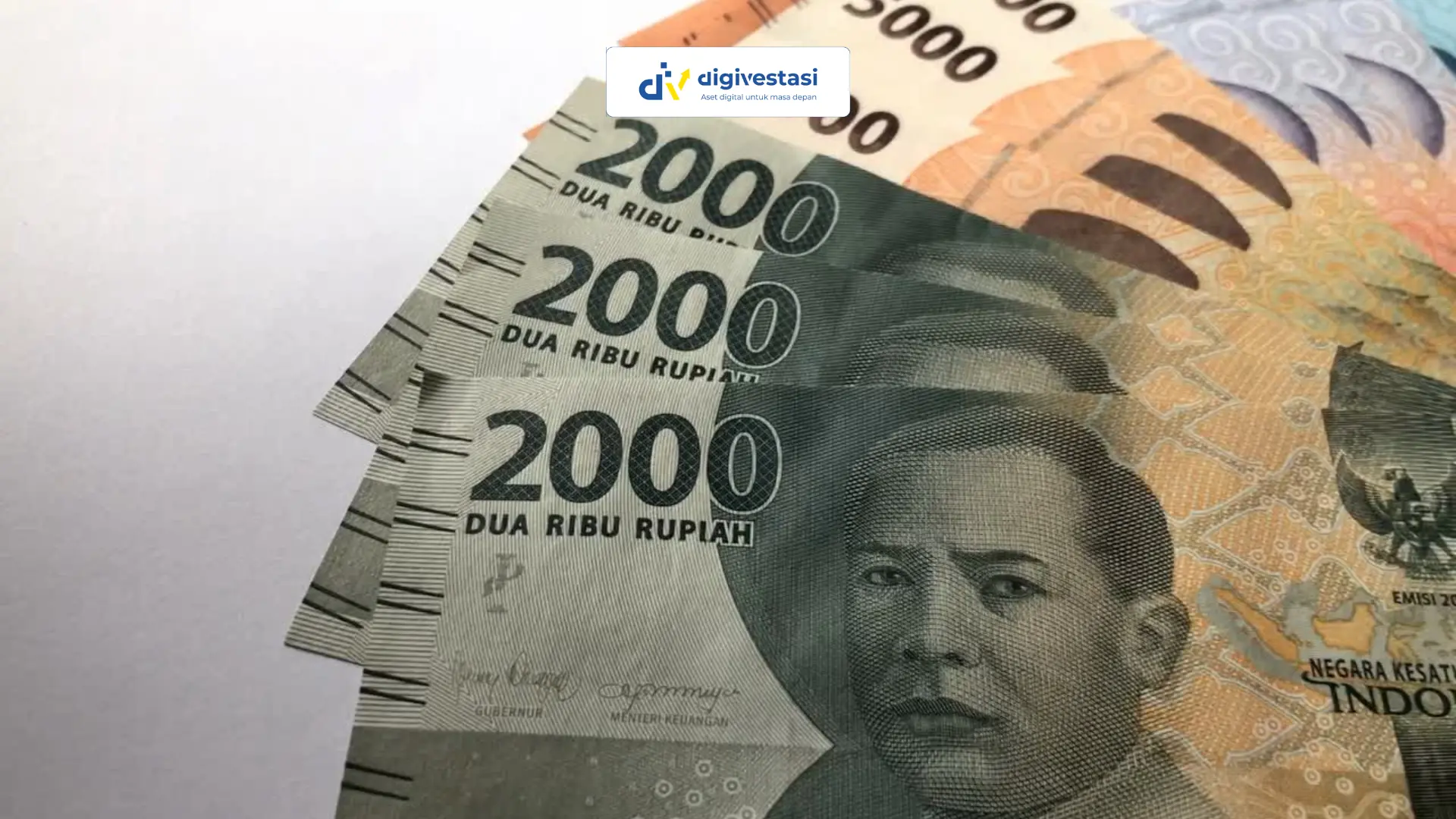
The weakening of the Indonesian rupiah against the United States (US) dollar has begun to raise serious concerns among business players and investors.
This situation not only increases industrial production costs, but also has the potential to trigger foreign capital outflows, hinder business expansion, and increase the risk of layoffs.
Executive Director of Center of Economic and Law Studies (CELIOS), Bhima Yudhistira, stated that the rupiah’s depreciation signals that Indonesia’s macroeconomic condition is currently under significant pressure.
“The weakening rupiah sends a signal that macroeconomic conditions are facing major challenges. As the exchange rate declines further, businesses are becoming increasingly concerned about rising costs for imported raw materials, industrial machinery, and logistics,” Bhima told Kompas.com on Monday (18/5/2026).
According to him, the situation is making investors more cautious about investing in Indonesia, especially for long-term projects such as factory construction and industrial expansion.
Bhima explained that the weakening exchange rate also raises investment costs due to additional risks or risk premiums that investors must bear.
“Investors are reconsidering entering Indonesia because investment costs are becoming more expensive. Exchange rate risks are increasing, bond yields are rising, and banking loan costs may also go up,” he said.
Bhima believes that continuous exchange rate fluctuations are causing investors to lose certainty in planning long-term business strategies.
According to him, investors who previously had five- to ten-year investment horizons are now more inclined toward short-term strategies due to concerns over economic instability.
“If exchange rate conditions continue fluctuating like they are now, investors’ business plans will also change. As a result, there is potential for capital flight, investors who initially planned to enter may cancel their plans, while existing industries could postpone expansion or even consider relocation,” Bhima stated.
He added that the weakening rupiah would also affect public purchasing power because it could trigger inflation in the coming months.
“Business players certainly see that exchange rate depreciation will affect purchasing power and inflation, prompting them to revise their business strategies in Indonesia,” he said.
Bhima warned that the government needs to immediately implement mitigation measures so that pressure on the rupiah does not worsen further. He even predicted that the rupiah could surpass Rp20,000 per US dollar if the weakening continues without effective intervention.
“If today the exchange rate is around Rp17,600 and the depreciation averages 0.5 percent per day, then by June 9, 2026, the rupiah could exceed Rp20,000 per US dollar,” he said.
According to Bhima, global external pressures are indeed one of the main causes behind the rupiah’s depreciation. However, he believes domestic economic fundamentals and government communication also influence investor perceptions.
“Who would want to invest in an economy considered shaky or highly volatile like the current one?” Bhima remarked.
In addition to slowing new investment, Bhima stated that the weakening rupiah is also making corporate financing more difficult and expensive.
He cited companies seeking to issue shares on the capital market, which are now facing challenges due to weak stock market conditions.
“The most significant impact is on financing. It becomes more expensive and more difficult. Even if companies continue expanding, they must bear much higher costs,” he explained.
According to Bhima, this condition needs to be addressed immediately to prevent deeper pressure on national industrial activity and greater risks of mass layoffs across various sectors.
“In reality, the most noticeable impact is on financing, which becomes more costly and difficult, so even when companies expand, they must pay significantly higher prices,” Bhima emphasized.
The rupiah’s depreciation to Rp17,667 per US dollar on Monday (18/5/2026) has begun to create concerns among business owners and investors.
The condition is seen not only as increasing industrial production costs, but also as potentially triggering foreign capital outflows and increasing the risk of layoffs, particularly in labor-intensive sectors.
Head of Employment Affairs at Asosiasi Pengusaha Indonesia (APINDO), Bob Azam, stated that the weakening rupiah places the greatest pressure on the manufacturing sector because most raw materials still rely on imports.
“Around 70 percent of raw materials in the manufacturing sector are still imported. Over the past year, the rupiah has depreciated by more than 7 percent, and that has directly hit production costs,” Bob said on Monday (18/5/2026).
He explained that pressure on businesses comes not only from the rupiah exchange rate, but also from disrupted global supply chains, rising logistics costs, and international geopolitical conflicts.
According to Bob, the condition places businesses in a difficult position because rising production costs are not matched by the ability to increase selling prices amid weakening consumer purchasing power.
“Businesses are now being forced to maximize efficiency and productivity because costs have risen by double digits, while selling prices cannot be raised carelessly,” he said.
Bob acknowledged that the manufacturing sector is the most vulnerable because it is labor-intensive and absorbs a large workforce.
Even so, he believes businesses have actually been mitigating layoff risks over the past several years as the global economic slowdown began to emerge.
“This situation has actually existed for the past two or three years. Companies have therefore started preparing efficiency measures for quite some time,” he explained.
According to Bob, layoffs should not merely be viewed as threats, but as part of corporate survival efforts to avoid larger losses.
“What matters more is ensuring that workers affected by layoffs can quickly secure new jobs. That is the best form of protection,” he said.
He also argued that the government needs to pay greater attention to the manufacturing sector because it has substantial multiplier effects on the national economy and employment absorption.
Bob said there is still significant room for efficiency improvements in national industries without necessarily leading to workforce reductions.
He pointed to Indonesia’s logistics costs, which account for around 26 percent of total production costs, far above the ASEAN average of around 10 percent.
In addition, many companies still experience high defect rates in production, causing operational costs to swell.
“Improving productivity, logistics efficiency, cash flow strength, and reducing energy costs are crucial factors to ensure businesses can survive,” he stated.
According to him, employers and workers also need to establish better communication so that efficiency measures do not trigger industrial conflicts.
“If employers and labor unions can sit together and seek solutions, difficult situations like the current one will be easier to overcome,” Bob said.
He hopes the current rupiah depreciation represents the lowest point before global economic conditions gradually improve as geopolitical tensions ease.
“We hope this has become the bottom line. If global conditions recover and capital inflows return, Indonesia must already be prepared with pro-investment policies that support job creation,” Bob emphasized.
For information, at the close of the spot market on Monday (18/5/2026), the rupiah weakened to Rp17,668 per US dollar.
Meanwhile, the IHSG fell nearly 5 percent during the first trading session before gradually recovering in the second session. The index ultimately closed down 124.08 points at 6,599.24.
On the other hand, Indonesia’s economic growth reached 5.61 percent year-on-year in the first quarter of 2026.
The figure exceeded market expectations and marked the highest achievement in the past 13 quarters.
This surge was driven by strong consumption during Ramadan and Eid celebrations, along with a significant increase in government spending.
Indonesia’s economic growth demonstrates strong economic resilience, even surpassing the average growth of major trading partners such as China, Singapore, and Malaysia amid global uncertainty.
This was also emphasized by Coordinating Minister for Economic Affairs Airlangga Hartarto.
He stated that Indonesia’s economic growth was the highest among G-20 countries.
“Earlier, the BPS announcement for the first quarter was positive, with our growth reaching 5.61 percent. This growth is among the highest in the G-20. We are above China, Singapore, South Korea, Saudi Arabia, and even the United States,” Airlangga said at Istana Merdeka in Jakarta on Tuesday (5/5/2026).
Source: kompas.id
What do you think about this topic? Tell us what you think. Don't forget to follow Digivestasi's Instagram, TikTok, Youtube accounts to keep you updated with the latest information about economics, finance, digital technology and digital asset investment.
DISCLAIMER
All information contained on our website is summarized from reliable sources and published in good faith and for the purpose of providing general information only. Any action taken by readers on information from this site is their own responsibility.
SHARE
VIEW


