


Saham News
IDX Revises JCI Criteria from November 2: What HSC Stocks Mean for Investors
/index.php
Berita Terkini - Posted on 01 April 2026 Reading time 5 minutes
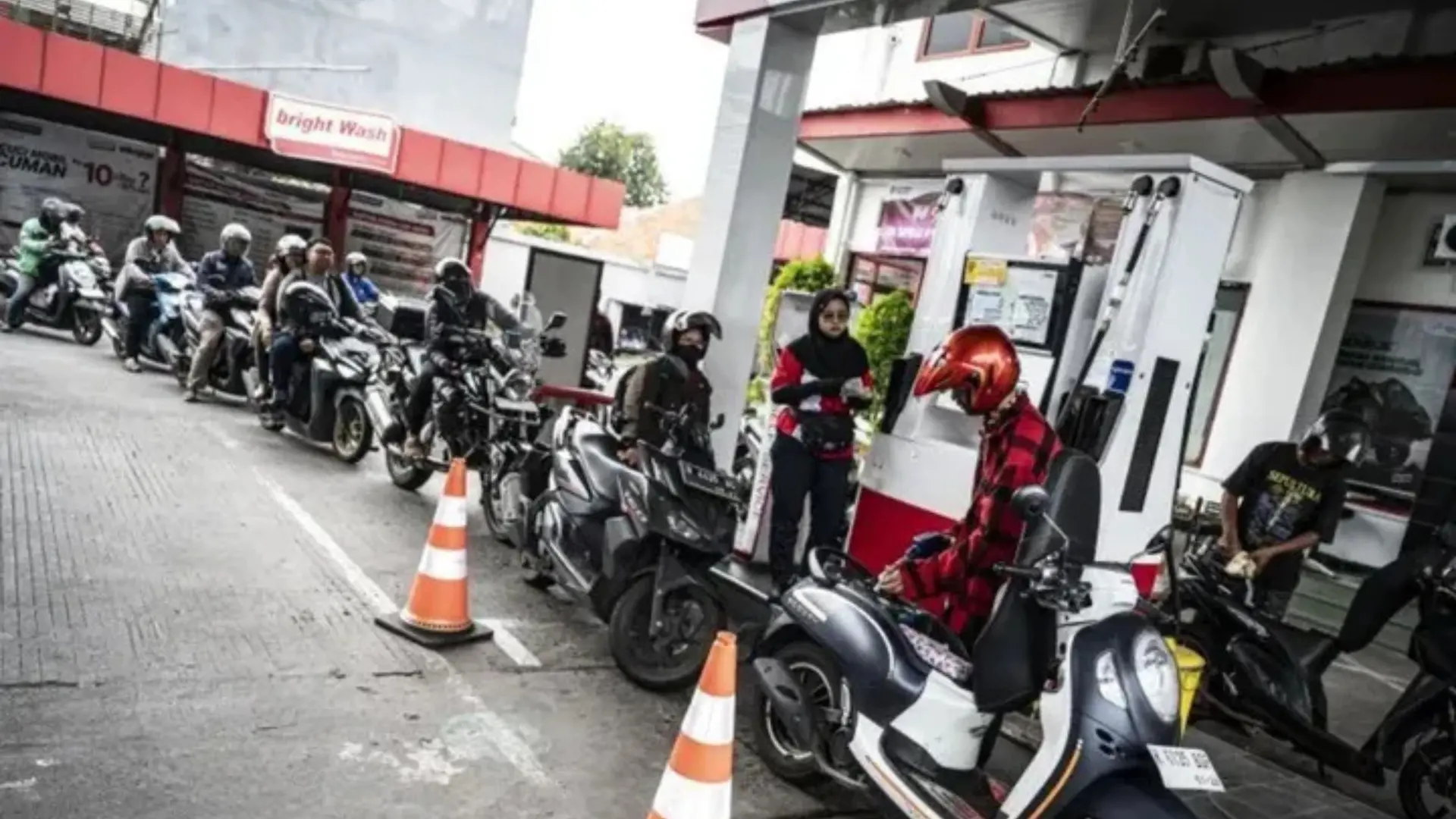
The Indonesian government has officially announced restrictions on fuel purchases, particularly for subsidized fuels such as subsidized diesel and Pertalite, limiting private vehicles to a maximum of 50 liters per day.
This policy was announced by Coordinating Minister for Economic Affairs Airlangga Hartarto in response to disruptions in global oil supply and prices caused by the Middle East conflict involving Iran, the United States, and Israel.
Airlangga stated that fuel distribution will be regulated ב×מצעות the MyPertamina barcode system, with a reasonable purchase limit set at 50 liters per vehicle. He delivered this statement during an online press conference on Wednesday (April 1, 2026).
He also emphasized that this restriction does not apply to public transportation vehicles.
Meanwhile, Minister of Energy and Mineral Resources Bahlil Lahadalia added that a daily limit of 50 liters is sufficient to fill a vehicle’s fuel tank when used wisely. He urged the public to consume fuel responsibly, prioritizing essential needs.
According to regulatory documents obtained by CNBC Indonesia, the control of subsidized fuel purchases via MyPertamina is stipulated in the Decree of the Head of BPH Migas No. 024/KOM/BPH.DBBM/2026 concerning the regulation of specific fuel distribution and assigned fuel types.
This regulation governs the distribution of subsidized diesel and RON 90 gasoline (Pertalite) used in the transportation sector for both passenger and goods transport.
The regulation states that to ensure proper targeting and volume distribution, control measures must be implemented for diesel and RON 90 gasoline specifically for motor vehicle transportation.
Under this decree, assigned business entities are required to regulate diesel distribution for transportation consumers with specific limits. For private four-wheeled vehicles, the maximum allocation is 50 liters per day per vehicle.
For public four-wheeled vehicles used for transporting passengers or goods, the limit is set at 80 liters per day per vehicle. Meanwhile, public vehicles with six wheels or more are allowed up to 200 liters per day per vehicle.
For public service vehicles such as ambulances, hearses, fire trucks, and garbage trucks, diesel distribution is capped at 50 liters per day per vehicle.
In addition to diesel, the regulation also covers RON 90 gasoline (Pertalite). Under these rules, distribution of Pertalite for four-wheeled vehicles, both private and public, is limited to a maximum of 50 liters per day per vehicle.
The same limit applies to public service vehicles, including ambulances, hearses, fire trucks, and waste transport vehicles, which are also restricted to 50 liters per day per vehicle.
Furthermore, BPH Migas requires assigned business entities to record vehicle license plate numbers for every fuel transaction, whether for diesel or Pertalite.
These entities are also obligated to submit reports on the implementation of fuel distribution control for diesel and RON 90 gasoline every three months or whenever necessary.
BPH Migas emphasized that any fuel distribution exceeding the specified limits will not be eligible for subsidies or compensation and will instead be treated as non-subsidized fuel (JBU).
The regulation also mandates that assigned business entities must disseminate this policy to distributors, consumers, and the public once the decision is enacted.
With the implementation of this regulation, the previous Decree of the Head of BPH Migas No. 04/P3JBT/BPH MIGAS/KOM/2020 is revoked and declared invalid.
This decision takes effect on April 1, 2026, and was issued in Jakarta on March 30, 2026, by the Head of BPH Migas, Wahyudi Anas.
Source: cnbcindonesia.com
What do you think about this topic? Tell us what you think. Don't forget to follow Digivestasi's Instagram, TikTok, Youtube accounts to keep you updated with the latest information about economics, finance, digital technology and digital asset investment.
DISCLAIMER
All information contained on our website is summarized from reliable sources and published in good faith and for the purpose of providing general information only. Any action taken by readers on information from this site is their own responsibility.
SHARE
VIEW


