


Technology Update
Apple Is 8 Years Late? China's Royole Launched a Foldable Phone Back in 2018
/index.php
Bisnis | Ekonomi - Posted on 14 April 2026 Reading time 5 minutes
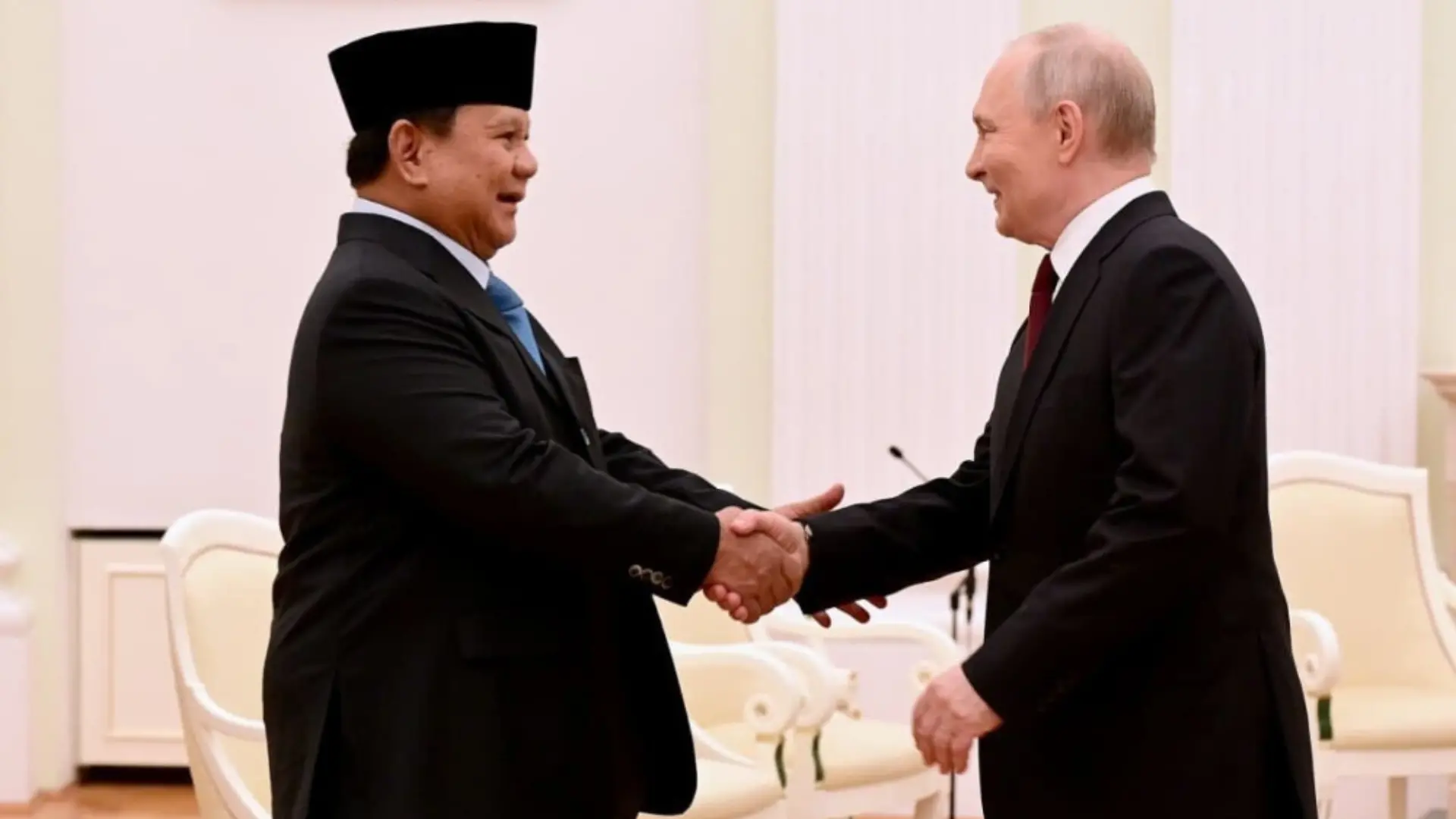
President of Indonesia, Prabowo Subianto, has concluded his meeting with Russian President Vladimir Putin at the Kremlin Palace in Moscow on Monday (April 13, 2026).
The meeting, held in Putin’s office, took place in a warm, friendly, and cordial atmosphere. From the outset, Putin expressed his appreciation for Prabowo’s visit to Moscow.
Putin conveyed his sincere gratitude for Prabowo’s willingness to accept the invitation and come to Moscow.
Prabowo responded in kind by thanking Putin for the warm reception, especially for taking the time to meet despite his busy schedule.
Following the main meeting, the agenda continued with a private tête-à-tête session held over a lunch gathering at the Blue Hall of the Kremlin.
Diplomatic relations between Indonesia and Russia have spanned 76 years since their official establishment in 1950, with both countries maintaining ties based on mutual respect and shared interests.
For Indonesia, Russia is a key strategic partner in both geopolitical and geo-economic terms, while Indonesia serves as one of Russia’s main partners in the Asia-Pacific region, particularly within ASEAN.
During the five-hour meeting, both countries agreed on several important strategic cooperation points.
One of the main agreements involves long-term cooperation in the energy and mineral resources sector, including strengthening oil and gas energy security and downstream development.
In addition, both nations reaffirmed their commitment to continue and expand cooperation in other areas such as education, technological research, agriculture, and industrial investment in Indonesia.
Russia’s strategic global position, including its veto power in the UN Security Council and its role as a founding member of BRICS, makes its partnership with Indonesia increasingly significant.
As a major global power with vast natural resources, Russia is seen as an important partner for Indonesia’s long-term development.
Beyond the agreed cooperation, Putin also invited Indonesia to expand collaboration into various sectors such as military, space, agriculture, industry, and pharmaceuticals.
Putin emphasized that both countries prioritize key strategic sectors in their cooperation and place great importance on developing military collaboration, including in education.
He also noted that both countries have maintained close diplomatic ties through their foreign ministries and active engagement in various international forums.
Indonesia’s membership in BRICS is expected to open new opportunities to expand cooperation, including with the Eurasian Economic Union.
Meanwhile, Prabowo stated that his visit to the Kremlin was also intended to consult with Putin regarding the rapidly evolving global geopolitical situation.
According to Prabowo, Russia has played a very positive role in addressing current geopolitical uncertainties.
Therefore, Indonesia considers it important to exchange views and discuss future strategies, particularly in strengthening cooperation in the economic and energy sectors.
Amid the serious discussions, the meeting also featured a lighter moment when Prabowo made Putin smile.
This occurred when Prabowo congratulated Putin on Cosmonaut Day, which commemorates Yuri Gagarin’s historic spaceflight on April 12, 1961.
Prabowo also mentioned that many Indonesians name their children Yuri or Gagarin, which amused Putin and brought a smile to his face.
Source: kompas.com
What do you think about this topic? Tell us what you think. Don't forget to follow Digivestasi's Instagram, TikTok, Youtube accounts to keep you updated with the latest information about economics, finance, digital technology and digital asset investment.
DISCLAIMER
All information contained on our website is summarized from reliable sources and published in good faith and for the purpose of providing general information only. Any action taken by readers on information from this site is their own responsibility.
SHARE
VIEW


