


Technology Update
Apple Is 8 Years Late? China's Royole Launched a Foldable Phone Back in 2018
/index.php
Bisnis | Ekonomi - Posted on 01 December 2025 Reading time 5 minutes
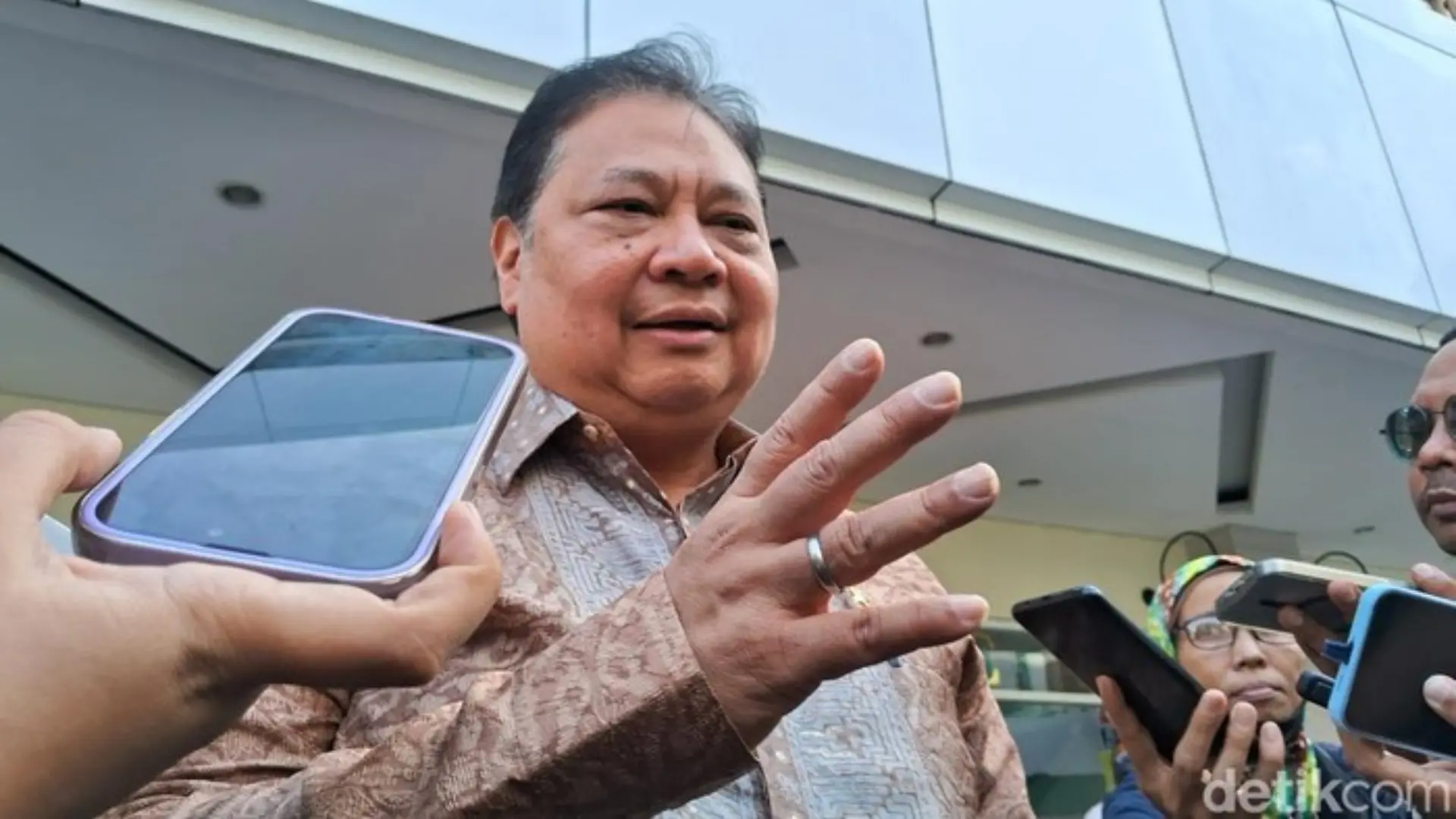
The government states that the national economy remains stable and resilient as the administration of President Prabowo Subianto enters its second year. This condition is supported by various indicators of economic stability that continue to show positive trends.
This statement was delivered by Coordinating Minister for Economic Affairs, Airlangga Hartarto, during a closed-door session of the C-Suite Dialogue, which is part of the 2025 Conference on Indonesian Foreign Policy (CIFP).
“The administration has been running for one year, and thankfully, the economy is still in a solid and stable position. Our economic growth of 5 percent has continued for seven consecutive years, meaning Indonesia has expanded 35 percent over that period despite global uncertainties and numerous crises we have weathered, including the tariff war,” Airlangga explained in a written statement on Sunday (November 30, 2025).
Airlangga highlighted that the nation’s economic resilience can be seen through rising consumer confidence, a manufacturing PMI that remains in expansion territory, and a strengthening financial market. Furthermore, both the exchange rate and inflation continue to be maintained within healthy boundaries.
On the investment front, total realization up to November has exceeded Rp 1,400 trillion, with a target of Rp 1,900 trillion by the end of 2025.
The government has already anticipated various global pressures throughout the year, preventing them from causing substantial impacts.
“All forms of uncertainty have already been priced in for this year. We’ve gone through the toughest headwinds. That’s why the outlook for 2026 is more optimistic, and we expect growth above 5.4%. There are no longer major risks like the Ukraine war, the Gaza conflict, COVID-19, or the tariff war—Indonesia has passed through all of them,” Airlangga remarked.
He also outlined the government’s efforts to strengthen Indonesia’s international economic standing. These efforts include a tariff agreement with the United States, the ongoing accession process to the CPTPP, Indonesia’s full membership in BRICS+, and progress toward joining the OECD.
Digital transformation is also prioritized, including the ASEAN Digital Economy Framework Agreement (DEFA), the expansion of local currency transactions (LCT), and cross-border QRIS interoperability.
Domestically, the government continues to pursue deregulation and simplify licensing processes. The implementation of service level agreements now helps accelerate licensing, while the Task Force for Accelerating Government Strategic Programs (P2SP) has been reinforced to resolve inter-ministerial obstacles.
Clean energy initiatives also receive significant focus, such as the planned development of the Green Super Grid, CCS/CCUS facilities, and the expansion of village-based solar power projects.
Source: detik.com
What do you think about this topic? Tell us what you think. Don't forget to follow Digivestasi's Instagram, TikTok, Youtube accounts to keep you updated with the latest information about economics, finance, digital technology and digital asset investment.
DISCLAIMER
All information contained on our website is summarized from reliable sources and published in good faith and for the purpose of providing general information only. Any action taken by readers on information from this site is their own responsibility.
SHARE
VIEW


