


Analisa Saham Terkini
JCI Could Test 5,500 This Week: Key Risks and Stocks on Phintraco's Watchlist
/index.php
Bisnis | Ekonomi - Posted on 19 August 2025 Reading time 5 minutes
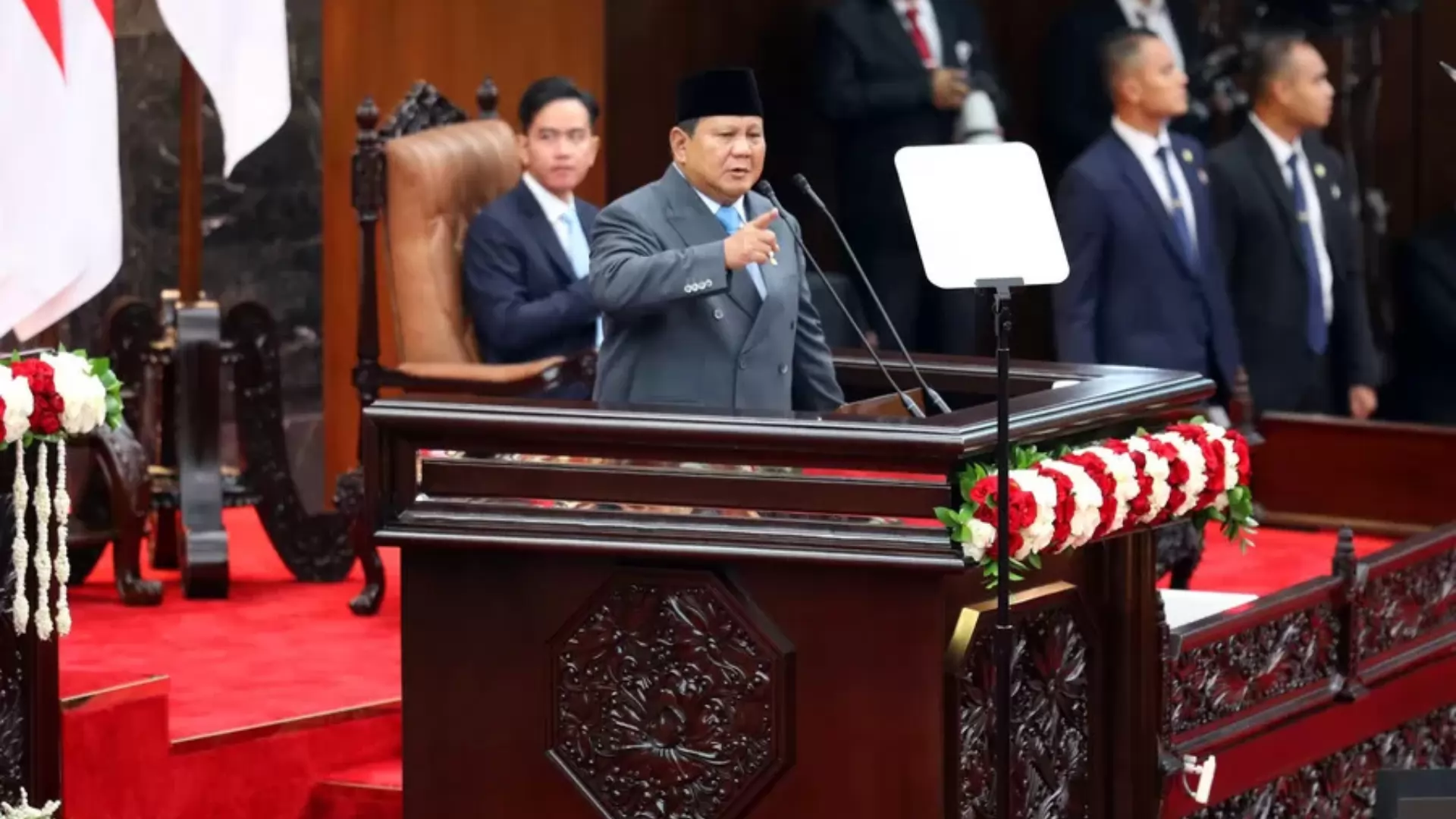
President Prabowo Subianto plans to secure new debt amounting to Rp 781.87 trillion in 2026. The government assured that debt management will continue to follow prudent principles, prioritizing innovative and sustainable financing.
“In the 2026 State Budget Draft (RAPBN), debt financing is projected at Rp 781.868 billion, which will be sourced through the issuance of government bonds (SBN) and loan withdrawals,” stated Book II of the Financial Note and RAPBN 2026, published on Monday (August 18, 2025).
The document elaborates that the 2026 state budget is designed to serve two main objectives: stabilizing the economy from potential turbulence and supporting the national development agenda. Thus, the budget is expected to implement priority development programs amid rising economic risks caused by global uncertainties.
“The government ensures that the 2026 debt management strategy is aligned with these goals. The adoption of an expansionary fiscal policy is intended to strengthen fiscal capacity so that the state budget can sustain economic growth and achieve development targets,” the document emphasized.
The same document also outlines debt financing trends over the past five years: Rp 870.5 trillion in 2021; Rp 696 trillion in 2022; Rp 404 trillion in 2023; Rp 558.1 trillion in 2024; and Rp 715.5 trillion in 2025 (outlook). For 2026, debt financing is projected to reach Rp 781.9 trillion.
This figure represents the highest level since 2021, the year of the COVID-19 pandemic, when significant financing was required. “The government guarantees that debt management will remain prudent, accountable, and under control to ensure fiscal sustainability,” the document stated.
The government further outlined three guiding principles for debt management. First, acceleration — leveraging debt as a catalyst for faster development while maintaining economic momentum. Second, efficiency — ensuring debt issuance comes with the lowest possible cost through deepening the financial market and diversifying instruments. Third, balance — maintaining an optimal debt portfolio that strikes the right trade-off between low cost and tolerable risk, thereby safeguarding fiscal sustainability.
Meanwhile, the 2026 State Budget Draft projects a fiscal deficit of Rp 638.8 trillion, equivalent to 2.48% of the Gross Domestic Product (GDP). This deficit arises because state expenditures are set at Rp 3,786.5 trillion, exceeding the targeted state revenue of Rp 3,147.7 trillion.
Source: detik.com
What do you think about this topic? Tell us what you think. Don't forget to follow Digivestasi's Instagram, TikTok, Youtube accounts to keep you updated with the latest information about economics, finance, digital technology and digital asset investment.
DISCLAIMER
All information contained on our website is summarized from reliable sources and published in good faith and for the purpose of providing general information only. Any action taken by readers on information from this site is their own responsibility.
SHARE
VIEW


