


Saham News
IDX Revises JCI Criteria from November 2: What HSC Stocks Mean for Investors
/index.php
Bisnis | Ekonomi - Posted on 30 March 2026 Reading time 5 minutes
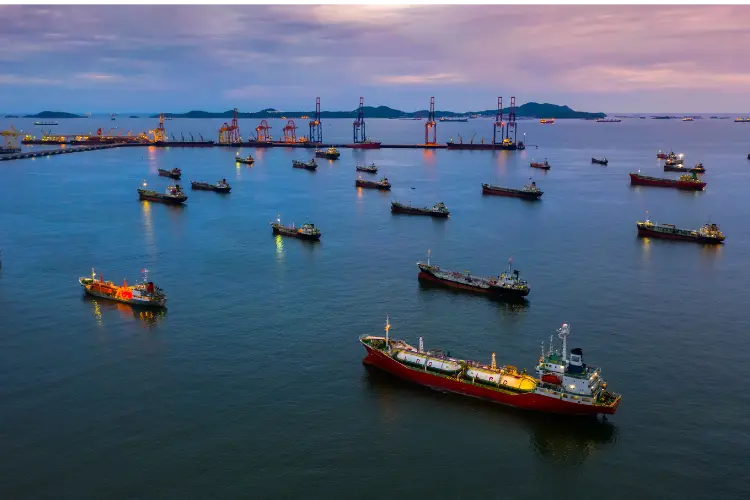
Minister of Energy and Mineral Resources Bahlil Lahadalia has spoken candidly: securing the release of two Indonesian tankers currently detained in the Strait of Hormuz is no straightforward matter. The geopolitical complexity and the acute sensitivity of the region, Bahlil stated, constitute a formidable barrier that must be confronted at every step of the diplomatic effort the government is actively pursuing.
Nevertheless, Bahlil confirmed that communication channels remain open and active. The Indonesian government has been described as intensively pursuing diplomatic avenues to ensure the safety of all crew members on board and to encourage a peaceful resolution to the situation. At the same time, he did not close his eyes to the reality that the dynamics unfolding in that region demand measured caution at every turn.
"The situation is not simple, as this involves a region that is highly sensitive in geopolitical terms. We must prioritize calibrated diplomacy," Bahlil stated in his official remarks.
The Strait of Hormuz is, by no measure, an ordinary waterway. It stands as one of the most vital energy arteries on the face of the earth, channeling the flow of oil from the Gulf region to the global markets that depend upon it. The tensions that have long characterized this region particularly between Iran and Western nations mean that any maritime incident occurring there carries the potential to escalate into an international issue of far greater magnitude than what initially appears on the surface.
On the domestic front, the wheels of inter-ministerial coordination have continued to turn. The Ministry of Energy and Mineral Resources and the Ministry of Foreign Affairs have been reported to be working in close collaboration to secure the most favorable resolution for all parties involved. The most pressing priority at this moment remains the safety and well-being of the crew members, as efforts simultaneously proceed to safeguard national interests amid a situation still laden with uncertainty.
This incident also carries a broader message: the security of global energy distribution routes is a matter that cannot be taken lightly. The world's deep dependence on strategic chokepoints such as the Strait of Hormuz means that even the smallest disruption carries the potential to ignite volatility in oil prices and destabilize economic conditions far beyond the boundaries of the immediate region.
For Indonesia, this episode serves as a timely reminder. Geopolitical risk is real, and it can touch the energy and logistics sectors at any moment, with little to no advance warning. More than that, this incident underscores the critical importance of diversifying energy supply routes and strengthening maritime diplomacy as integral components of a strategy designed to navigate a world that is growing increasingly difficult to read.
What do you think about this topic? Tell us what you think. Don't forget to follow Digivestasi's Instagram, TikTok, Youtube accounts to keep you updated with the latest information about economics, finance, digital technology and digital asset investment.
DISCLAIMER
All information contained on our website is summarized from reliable sources and published in good faith and for the purpose of providing general information only. Any action taken by readers on information from this site is their own responsibility.
SHARE
VIEW


