


Technology Update
Apple Is 8 Years Late? China's Royole Launched a Foldable Phone Back in 2018
/index.php
Bisnis | Ekonomi - Posted on 29 June 2025 Reading time 5 minutes
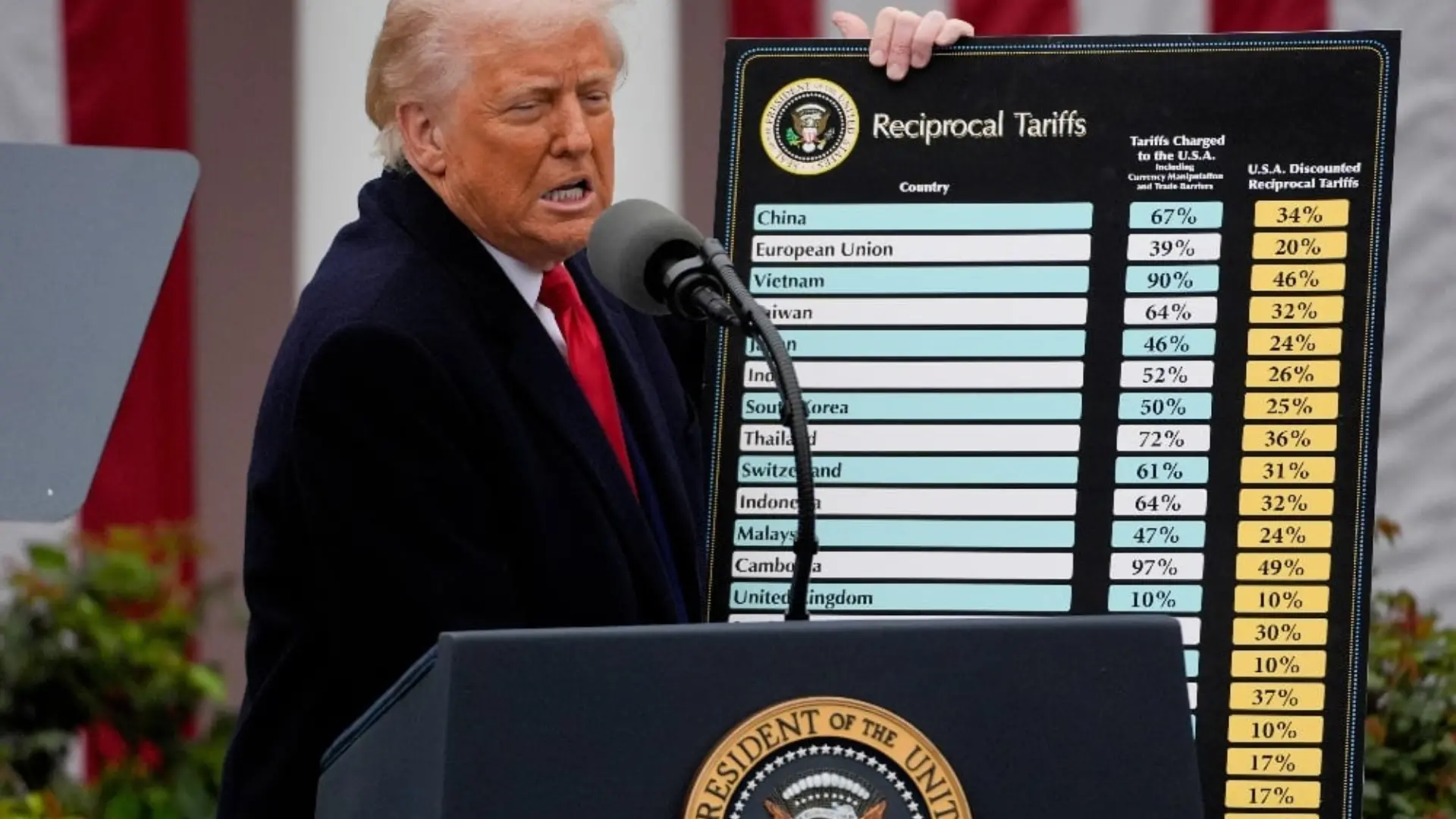
The trade war initiated by U.S. President Donald Trump is expected to be a key driver behind the reshaping of global supply chains into shorter, more regionally focused networks. Trinh Nguyen, Senior Economist for Emerging Asia at Natixis, explained that the pressure from trade tensions has prompted global companies to reevaluate and restructure their production strategies. In the past, companies freely sourced components from around the world due to low shipping costs and minimal trade barriers. However, that landscape has now shifted.
“If you’re facing a 25% tariff, it becomes more practical to complete production in a single location and pay duties only on the final goods,” Trinh said during a workshop in Singapore recently attended by Bisnis. She noted that this shift has led to significant changes. Rather than a complete breakdown of global supply chains, what’s occurring is a realignment—where regional integration is becoming deeper within areas like Asia, Europe, and North America.
She cited an example from the automotive industry: before the onset of the trade war, automakers frequently shipped components across borders as part of the manufacturing process. Now, companies are leaning toward consolidating supply chains within a single trade bloc, such as the USMCA (United States-Mexico-Canada Agreement) region.
Additionally, Trinh observed that ASEAN nations have increasingly pursued multilateral trade agreements with neighboring countries. In fact, total trade reached US$2.171 trillion in 2023 with major partners including the United States, China, the European Union, Japan, South Korea, Taiwan, Australia, and India. “Trade hasn’t stopped, but it’s becoming more concentrated. We’re seeing a strengthening of regional supply chains, and this is happening in many parts of the world,” she explained.
This trend is often referred to as nearshoring or onshoring, where companies relocate production closer to consumer markets or to regions with fewer trade barriers. Trinh emphasized that this is not a disruption, but a reconfiguration of global production flows. International trade will continue, though through different routes and with more dispersed production hubs.
“China will remain part of the supply chain, but it won’t be the sole production hub anymore. More new centers will emerge, depending on the region,” she stated. According to Trinh, global supply chains are unlikely to revert to their previous form. Instead of a fully integrated global network, companies are expected to enhance regional connectivity in pursuit of efficiency and to mitigate geopolitical risks.
Source: bisnis.com
What do you think about this topic? Tell us what you think. Don't forget to follow Digivestasi's Instagram, TikTok, Youtube accounts to keep you updated with the latest information about economics, finance, digital technology and digital asset investment.
DISCLAIMER
All information contained on our website is summarized from reliable sources and published in good faith and for the purpose of providing general information only. Any action taken by readers on information from this site is their own responsibility.
SHARE
VIEW


