


Saham News
JCI Today, July 27, 2026: Stock Picks and Key Market Levels to Watch
/index.php
Bisnis | Ekonomi - Posted on 05 March 2025 Reading time 5 minutes
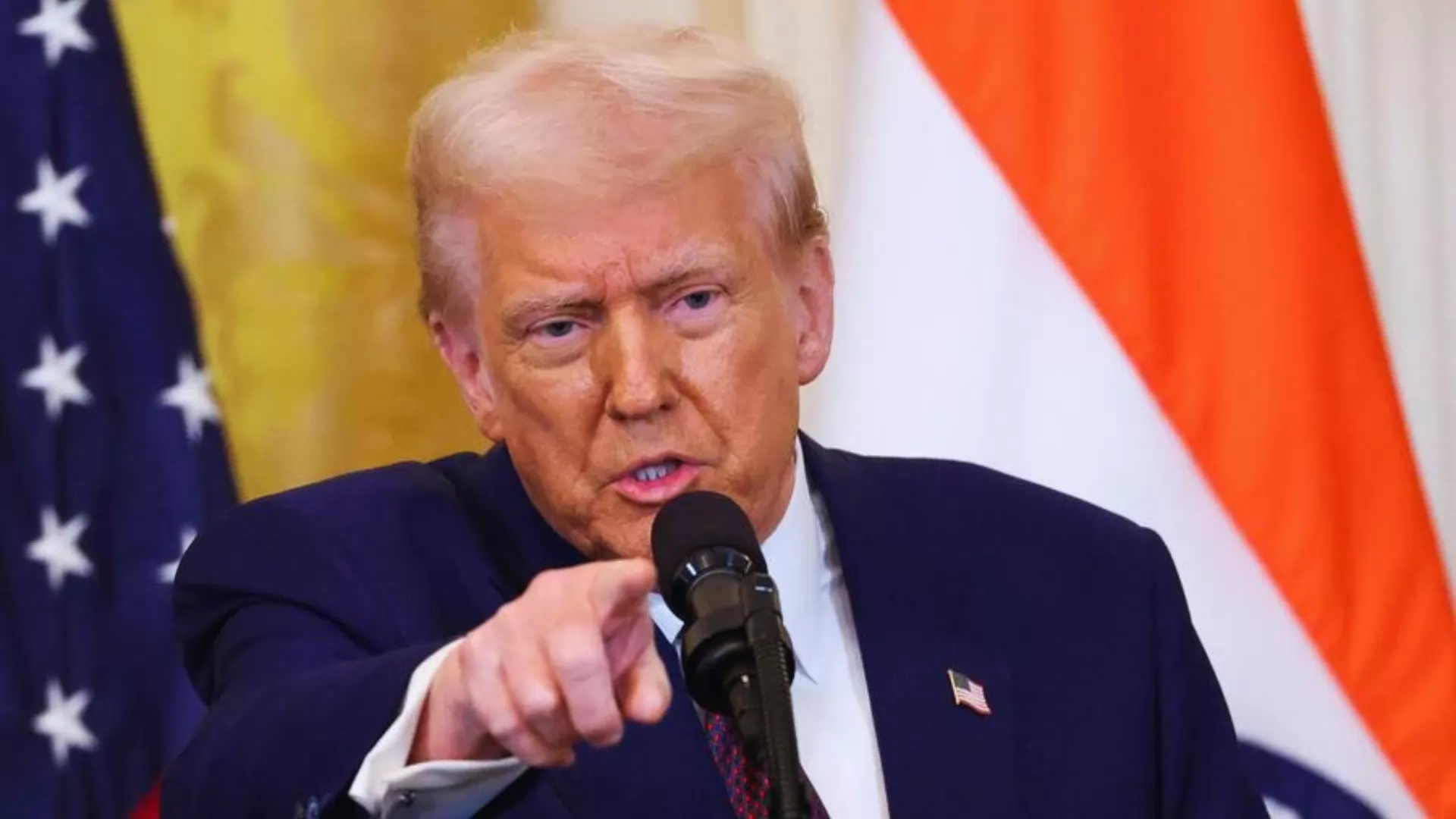
The United States is facing a stagflation threat after President Donald Trump imposed new tariffs in an ongoing trade war. Analysts warn that since these tariffs were implemented, key economic indicators have signaled a slowdown in economic activity across the nation.
According to CNBC International on Wednesday (March 5, 2025), the combination of rising prices and slowing growth has triggered concerns among consumers, business leaders, and policymakers. In response, investors have sold off stocks and shifted to bonds as a safer asset.
"In terms of direction, this is stagflation," said Mark Zandi, Chief Economist at Moody’s Analytics. "Higher inflation and weaker economic growth are the result of tariff and immigration policies."
Stagflation has not been a significant concern since the high-inflation, slow-growth era of the 1970s and early 1980s. However, current economic trends suggest a return to conditions not seen in five decades, as reflected in consumer sentiment surveys and supply chain indices.
Consumer long-term inflation expectations have reached their highest level in nearly 30 years, while overall sentiment has fallen to multi-year lows. According to the U.S. Commerce Department, consumer spending dropped sharply in January, hitting its lowest point in nearly four years, despite a surge in household income.
On Monday, a Purchasing Managers’ Survey from the Institute for Supply Management (ISM) revealed that factory activity barely grew in February, with new orders plunging to their lowest level in almost five years, while prices surged at their highest monthly margin in over a year.
Following the ISM report, the Atlanta Federal Reserve’s GDPNow indicator lowered its first-quarter growth projection to an annualized 2.8% contraction. If this prediction holds, it would mark the first negative growth quarter since Q1 2022 and the worst economic decline since the Covid-19 lockdowns in early 2020.
"Inflation expectations are rising. People are anxious and uncertain about growth," said Zandi. "We are heading toward stagflation, but it won’t be as severe as in the 1970s and 80s because the Fed won’t allow it."
Uncertainty surrounding stagflation has sent ripples through financial markets. The Dow Jones Industrial Average has dropped 4.5% since early March, erasing gains made after Trump’s election victory in November 2024.
Despite the market turbulence, the CBOE Volatility Index (VIX) – often called the “fear gauge” – remained around 23 on Tuesday afternoon, slightly above its long-term average, suggesting that panic has not yet set in.
"This is not the time to hit the panic button," said Mark Hackett, Chief Market Strategist at Nationwide. "At this point, I still see it as a healthy reset of expectations."
However, the effects extend beyond stocks. Treasury bond yields have declined after spiking in September. The benchmark 10-year yield has dropped to 4.2%, down from its January peak.
"Stagflation is now a bigger concern than ever," Hackett added. "We must remain vigilant, as the heightened uncertainty is starting to shape economic behavior."
Temukan berita dan artikel lainnya di Google News
Source: cnbcindonesia.com
What do you think about this topic? Tell us what you think. Don't forget to follow Digivestasi's Instagram, TikTok, Youtube accounts to keep you updated with the latest information about economics, finance, digital technology and digital asset investment.
DISCLAIMER
All information contained on our website is summarized from reliable sources and published in good faith and for the purpose of providing general information only. Any action taken by readers on information from this site is their own responsibility.
SHARE
VIEW


