


Technology Update
Apple Is 8 Years Late? China's Royole Launched a Foldable Phone Back in 2018
/index.php
Bisnis | Ekonomi - Posted on 10 June 2025 Reading time 5 minutes
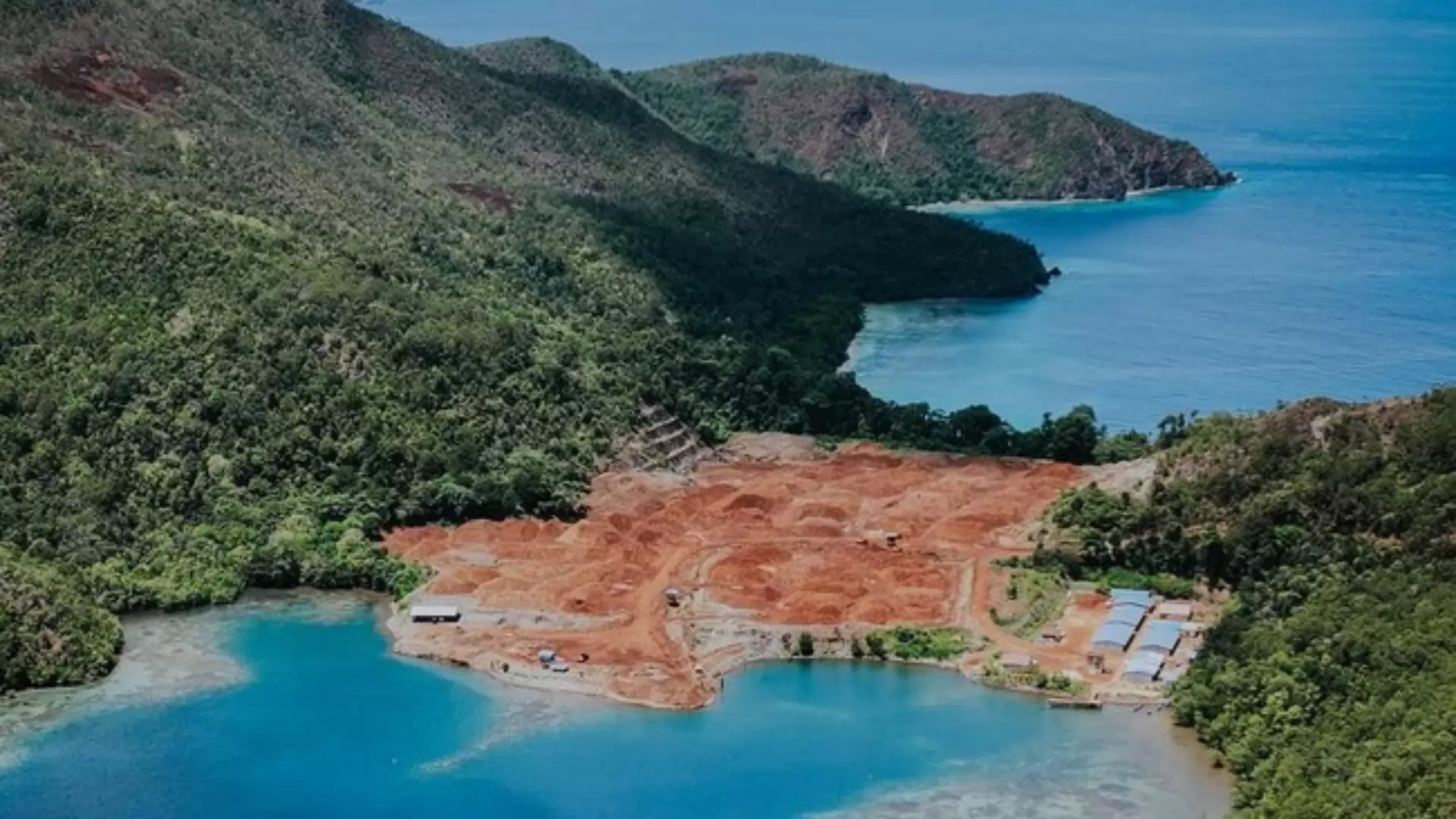
Numerous parties have firmly rejected nickel mining activities in the Raja Ampat region. The government, as the entity responsible for granting operational permits, is urged to be accountable before environmental damage and negative impacts become more widespread. As a tourism destination, Raja Ampat has long embraced a sustainable development model that generates hundreds of billions of rupiah annually for the region.
Nickel mining activities in Raja Ampat Regency, Southwest Papua, have drawn widespread opposition from various groups. This rejection comes not only from activists but also businesspeople, academics, and religious leaders. The situation highlights a harsh reality—that some parties ignore the long-term consequences of economic activities, particularly their impact on the tourism sector.
Pauline Suharno, Chair of the Indonesian Travel Agents Association (Astindo), stated that mining and tourism industries cannot coexist. According to her, any form of mining inevitably results in environmental degradation. Meanwhile, tourism heavily depends on the health and sustainability of ecosystems, especially as global travel trends increasingly prioritize sustainability.
"The current trend in tourism leans toward sustainable practices that are themselves a major attraction. The natural beauty and biodiversity of Raja Ampat are under threat from exploitative mining, environmental destruction, and irresponsible waste disposal," Pauline said in Jakarta on Monday (9/6/2025).
The government plays a crucial role since it is responsible for issuing permits. The consequences of mining stem from these initial decisions.
"But in Indonesia, where regulations often overlap, anything can happen. Law enforcement is frequently inconsistent. Issues usually need to go viral before receiving attention," Pauline added.
Visiting Raja Ampat is relatively expensive, making it a premium destination. Resolving this issue requires coordination among ministries such as the Ministry of Environment and Forestry (KLHK), the Ministry of Energy and Mineral Resources (ESDM), the Ministry of Tourism, and others.
"This country needs a clear blueprint. No agency can act in isolation. The coordinating body—whether a coordinating ministry or the President—must be clearly defined. Evaluating performance based only on each ministry's Key Performance Indicators (KPIs) is insufficient," she emphasized.
Tourism's Economic Contribution
According to an open letter by IDCA, the Ministry of Tourism noted that over 60 percent of Indonesia's tourism appeal comes from nature. A study by UNDP and BRIN concluded that ecotourism and community-based conservation bring significant economic benefits without harming the environment.
Throughout 2024, at least 30,000 tourists visited Raja Ampat, 70 percent of whom were international visitors. They contributed around IDR 150 billion annually to the regency's local revenue, not including multiplier effects for the local community.
The rejection was echoed by Rusmiati, Chair of the Indonesian Tour and Travel Agencies Association (Asita), in her open letter to President Prabowo Subianto. She voiced concern over the growing presence of nickel mining on Kawe, Gag, and Manuran Islands in Raja Ampat.
Recognized globally as a marine biodiversity hotspot and designated a UNESCO global geopark, Raja Ampat is part of Indonesia’s marine conservation network.
According to Greenpeace Indonesia, mining activities have led to deforestation, sedimentation, marine pollution, coral reef destruction, and potential social conflict. These impacts also jeopardize tourism, the backbone of the local economy.
"Mining activities are in direct contradiction with sustainable tourism principles and raise doubts about the validity of conservation fees charged to tourists," Rusmiati wrote.
Every visitor to Raja Ampat must comply with conservation regulations and pay a conservation fee. However, mining operations are undermining public trust in these preservation efforts.
Asita urged President Prabowo to halt all mining in the Raja Ampat conservation area. Commitment to sustainable tourism that supports the environment and local communities must be enforced. Protective policies should involve Indigenous communities, tourism stakeholders, and conservation organizations.
"Green tourism and sustainable development are the future. This is not just a slogan, but a real commitment to the environment, local culture, and future generations," Rusmiati affirmed.
Rejection also came from Bishop Bernardus Bofitwos Baru of Timika in his sermon, lamenting that approximately 2,000 hectares of land had been destroyed for the sake of greedy oligarchs. He delivered this message during a broadcasted service at the Three Kings Cathedral in Timika.
"Beautiful Raja Ampat is being ruined by the greed of those in power under the guise of National Strategic Projects. Will we follow the spirit of destruction, or the Spirit of Christ who values life and nature?" said Bernardus.
The Raja Ampat nickel mining issue gained prominence after a peaceful protest by Greenpeace activists and local youth during the 2025 Indonesia Critical Minerals Conference. They raised banners reading: "What’s the True Cost of Your Nickel?", "Nickel Mines Destroy Lives", and "Save Raja Ampat from Nickel Mining".
Government Response
In response, the Ministry of Tourism and Commission VII of the House of Representatives met with Indigenous communities opposed to new mining permits. They emphasized the importance of preserving Raja Ampat’s identity as a tourism hub rather than an extractive industry zone. Commission VII also called on the central government to reevaluate all mining permits.
Elisa Kambu, Governor of Southwest Papua, informed the Ministry of Tourism that Raja Ampat's development direction must remain focused on marine conservation, UNESCO geopark status, and its role as a priority tourism destination. This direction, he said, cannot be compromised by mining.
"We at the local level have limited authority. Through communication, we hope the central government will prioritize Raja Ampat as a global treasure," Elisa said.
Minister of Tourism Widiyanti Putri Wardhana stated that any development in Raja Ampat must consider the ecosystem and maintain a balance between conservation and progress.
However, Minister of Energy and Mineral Resources Bahlil Lahadalia argued that the nickel mining locations are far from the tourist hotspot of Piaynemo and the Raja Ampat geopark.
Data from the Directorate General of Mineral and Coal (Minerba) shows that all Mining Business Permits (IUP) in Raja Ampat are for nickel. PT Gag Nikel, operating on Gag Island, is a subsidiary of PT Antam. PT Kawei Sejahtera Mining holds a permit in Kawei, PT Anugerah Surya Pratama in Manuran, and PT Mulia Raymond Perkasa in Batangpele and Manyaiful.
Legal Protections
Azril Azhari, Chair of the Indonesian Tourism Scholars Association, noted that the Constitutional Court had rejected a judicial review of Law No. 1/2014 on Coastal and Small Island Management (PWP3K) submitted by nickel mining company PT Gema Kreasi Perdana.
"The ruling reinforces the ban on mining activities on small islands, defined as islands ≤2,000 km²," he stated.
This law aims to protect ecosystems and the rights of small island communities. The Constitutional Court’s decision should serve as the basis for the government to shut down mining operations on small islands.
Azril argued that development in PWP3K zones must be re-evaluated. Development focused solely on short-term economic gains without regard for the environment leads to disaster.
"Economic focus should prioritize local community income, not investor profits. Economic calculations must include the value of ecosystem services, which are often ignored," Azril emphasized.
The cultural ecosystem of Indigenous communities is an invaluable asset that must be preserved. A permanent moratorium is needed for the benefit of Indigenous peoples, not capital owners.
The government must revoke mining permits in Raja Ampat and treat this situation as a lesson in managing Indonesia’s small islands.
"Many uninhabited islands should be protected. Indonesia is beautiful, but it’s us—sometimes our own officials—who are destroying it. No mining should be allowed in coastal and small island areas," he concluded.
Source: kompas.com
What do you think about this topic? Tell us what you think. Don't forget to follow Digivestasi's Instagram, TikTok, Youtube accounts to keep you updated with the latest information about economics, finance, digital technology and digital asset investment.
DISCLAIMER
All information contained on our website is summarized from reliable sources and published in good faith and for the purpose of providing general information only. Any action taken by readers on information from this site is their own responsibility.
SHARE
VIEW


