


Technology Update
Apple Is 8 Years Late? China's Royole Launched a Foldable Phone Back in 2018
/index.php
Berita Terkini - Posted on 23 April 2026 Reading time 5 minutes
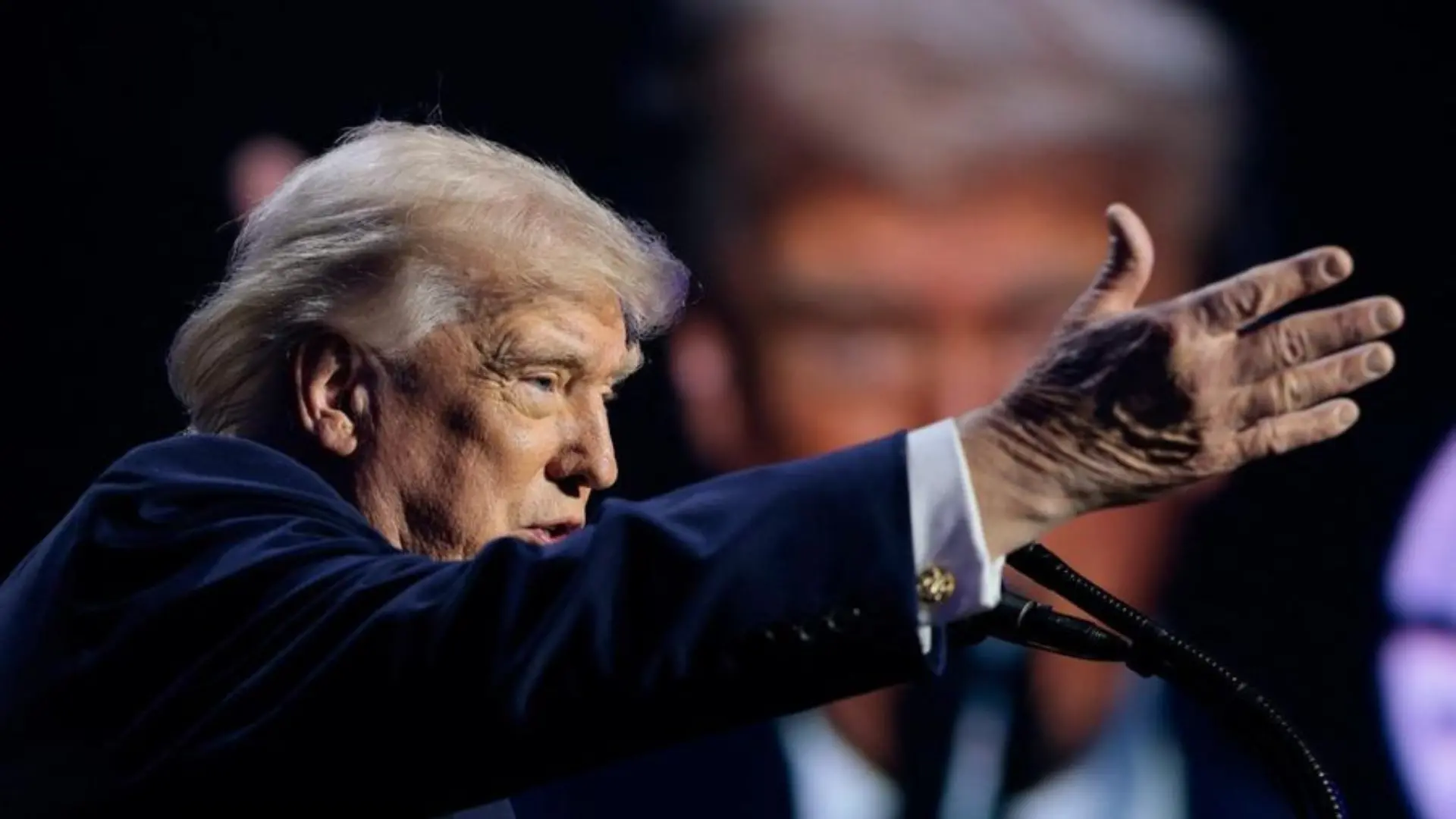
The conflict between the United States and Iran is seen as once again exposing a long-standing weakness of Washington—its recurring failure to understand the mindset, values, and perspectives of its adversaries. According to The Economist, this weakness represents a significant flaw in Donald Trump’s war strategy toward Iran.
Historically, U.S. presidents have often portrayed their opponents to troops as dangerous enemies that must be stopped immediately. They emphasize that even if the adversary has not surrendered, American forces will continue targeting key strategic points believed to weaken them. They also frequently highlight that the U.S. military possesses capabilities unmatched by other nations.
The president typically explains that U.S. troops deployed abroad are working to reshape conflict zones into safer and more stable regions. Soldiers are encouraged to take pride in serving a nation considered strong and unified.
Meanwhile, to reassure a skeptical domestic audience, the Pentagon regularly presents operational data. U.S. generals detail the number of bombs dropped and the targets destroyed. Infrastructure such as bridges and oil refineries is also attacked because it is believed to support the enemy’s operations.
However, when wars expected to end quickly instead drag on for weeks, such figures fail to conceal the reality that the United States has miscalculated. Military pressure alone proves insufficient to force the opponent into submission.
Interestingly, this pattern does not originally refer to Donald Trump, but to events in 1999 under President Bill Clinton. At that time, U.S. and NATO military planners believed it would take only three days of airstrikes to break Serbian leader Slobodan Milosevic’s resolve.
The goal was to halt ethnic cleansing against Albanians in Kosovo, a former Yugoslav region. In reality, the air campaign lasted 79 days before Serbia eventually conceded, largely due to the credible threat of a NATO ground invasion.
This comparison shows that the kind of miscalculation now associated with Trump is not new in U.S. history.
Although Trump has distinctive traits—such as issuing blunt threats, acting impulsively, and rejecting inconvenient facts—previous American presidents have made similar errors.
For instance, John F. Kennedy and Lyndon B. Johnson once assumed that the Vietnamese would welcome the United States as an ally against communism. In reality, many Vietnamese viewed the U.S. as a colonial force.
At the core of the issue is America’s tendency to underestimate cultural factors when designing foreign policy and military strategies.
Within the U.S. intelligence community, awareness of this “blind spot” has grown over the past one to two decades, with the Kosovo War often cited as a key example.
One notable reference is the 2011 paper Cultural Topography by former CIA officials Jeannie Johnson and Matthew Berrett. The paper argues that U.S. planners underestimated Serbian cultural values related to honor, dignity, and resilience under pressure.
As a result, the United States failed to recognize that Serbia could perceive itself as victorious simply by enduring against a far superior military force, even when the world expected a swift surrender.
Similar mistakes were later repeated in Afghanistan and Iraq. U.S. leaders and commanders often treated foreign conflicts merely as targets to strike or problems to solve quickly.
In reality, these situations involve complex social, political, and cultural dimensions that require deeper understanding. Johnson and Berrett later founded the Centre for Anticipatory Intelligence at Utah State University to train analysts in incorporating cultural insights into threat and opportunity assessments.
Berrett argues that policymakers should first consider whether their foreign policy objectives require another country to fundamentally change its culture or worldview. If so, they should realistically assess how long such change would take and what resources would be required—questions that are rarely asked.
One reason is America’s overwhelming military strength, which often leads to strategy being considered only afterward. Additionally, the U.S. tends to overemphasize its success in transforming Germany and Japan into democratic allies after 1945, while overlooking that such transformations resulted from total war, including the use of atomic bombs.
Regarding Iran, Trump has frequently criticized previous administrations for attempting to turn Middle Eastern countries into liberal democracies. Yet in practice, his administration has still pushed for fundamental changes in Iran.
Vice President J.D. Vance stated that Trump wants Iran to behave like a “normal” country—one that prioritizes economic and business interests over ideology. This implies a push for Iran to move away from its long-standing Islamic nationalist foundation.
Ultimately, Trump’s approach to warfare is viewed as repeating many of America’s longstanding cultural miscalculations, but without the element of idealism that once characterized Washington’s policies.
Where earlier U.S. presidents were often criticized for having good intentions but misreading reality, Trump is seen as having removed the element of goodwill without necessarily correcting the core mistake.
Source: cnbcindonesia.com
What do you think about this topic? Tell us what you think. Don't forget to follow Digivestasi's Instagram, TikTok, Youtube accounts to keep you updated with the latest information about economics, finance, digital technology and digital asset investment.
DISCLAIMER
All information contained on our website is summarized from reliable sources and published in good faith and for the purpose of providing general information only. Any action taken by readers on information from this site is their own responsibility.
SHARE
VIEW


