


Technology Update
Apple Is 8 Years Late? China's Royole Launched a Foldable Phone Back in 2018
/index.php
Crypto News - Posted on 21 January 2026 Reading time 5 minutes
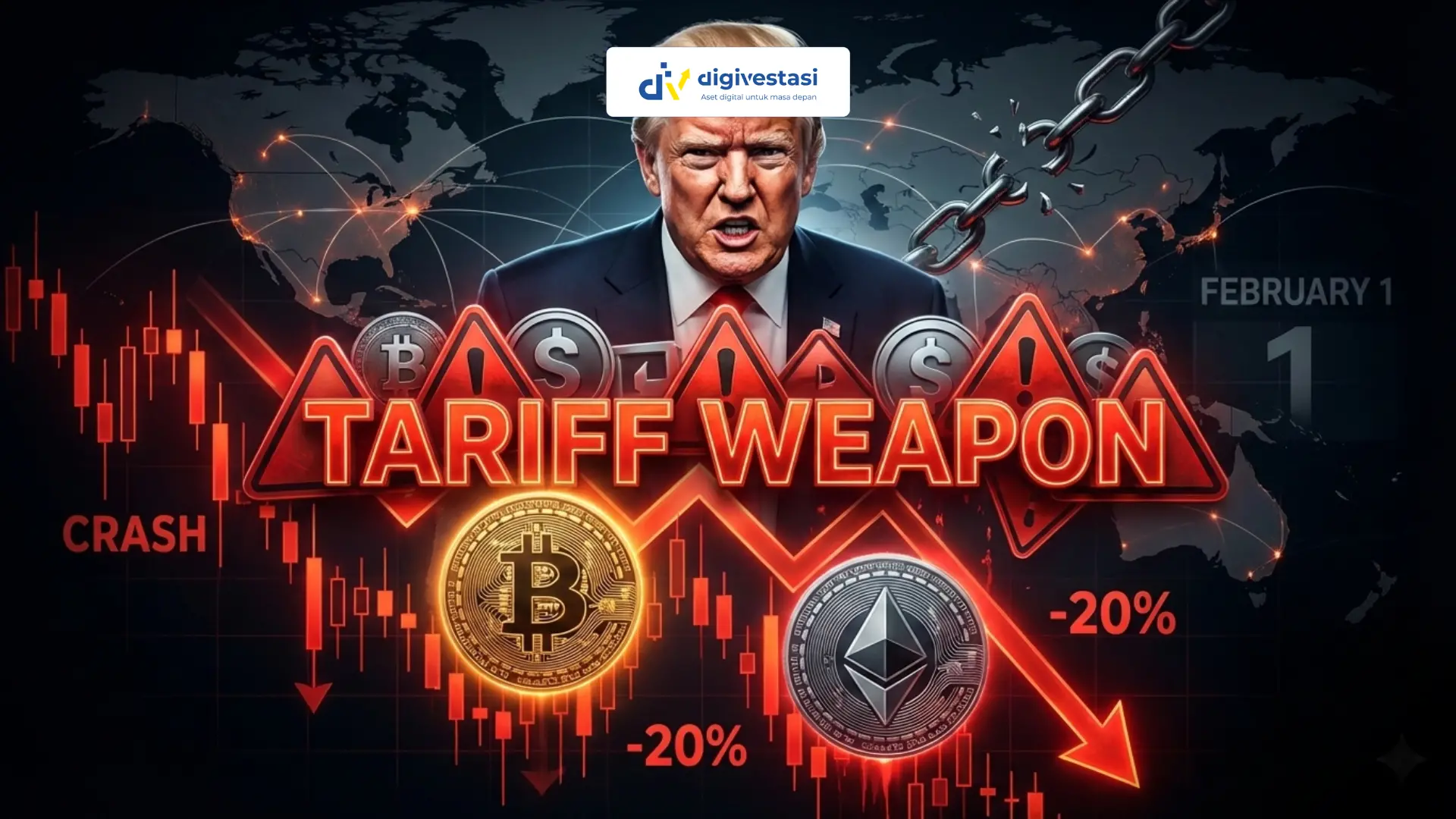
Global financial markets shifted back into risk-off mode on Tuesday (Jan 20) after U.S. Treasury Secretary Scott Bessent publicly reaffirmed the Trump administration’s readiness to deploy tariffs as a primary geopolitical tool. The remarks reignited concerns over trade-war-driven inflation, just as the crypto market had begun to show signs of stabilization.
Bitcoin slipped below the US$90,000 level, while Ethereum fell under US$3,000. The move reflected a broader reassessment of macroeconomic risks following Bessent’s comments at the World Economic Forum (WEF) in Davos.
Speaking in Davos, Bessent emphasized that tariffs remain a central pillar of U.S. foreign policy strategy. He framed tariffs not as a temporary measure, but as a deliberate and effective instrument to exert pressure on international partners.
“Sit down, take a deep breath, and don’t retaliate. The President will be here tomorrow and he will deliver the message himself,” Bessent said, responding to European criticism over tariff threats linked to the Greenland issue.
The statement suggested that the White House has already anticipated resistance from allied nations and is prepared to escalate if necessary. Markets interpreted this as confirmation that trade friction risks—particularly between the U.S. and the European Union—are once again intensifying.
Bessent also outlined a clear timeline, noting that President Trump could impose a 10% tariff starting February 1 if Denmark and allied countries refuse to cooperate on matters related to Greenland.
Beyond geopolitics, Bessent defended tariffs as economically effective and dismissed claims that they would harm the U.S. domestic economy.
He argued that it is highly unlikely the Supreme Court would overturn a major presidential economic policy, adding that tariffs have already generated substantial revenue for the government.
However, this view contrasts with recent research indicating that U.S. consumers bear most of the tariff burden. Studies by European and American economists suggest that tariffs function like a hidden consumption tax, gradually eroding household purchasing power.
This dynamic is particularly important for crypto markets. Reduced consumer liquidity and rising price pressures tend to weaken speculative capital flows, especially toward high-risk assets such as cryptocurrencies.
Bessent attempted to ease bond market concerns by attributing the recent rise in yields to turbulence in Japan rather than U.S. policy actions.
He pointed out that Japan’s bond market had experienced an extreme six-standard-deviation move over the past two days, making it difficult to isolate U.S.-specific factors.
Nonetheless, market participants focused on the broader picture: looming tariff threats, geopolitical escalation, and rising interest rate volatility—a combination that has historically weighed heavily on crypto assets.
Bitcoin’s failure to hold above US$90,000 and Ethereum’s drop below US$3,000 reflect this renewed risk reassessment. Altcoins saw even sharper declines, driven by deleveraging and reduced risk exposure.
The sell-off mirrors a recurring pattern in which tariff announcements drain liquidity without immediately triggering a broad economic contraction. Tariffs were also a key factor behind the crypto market’s sideways movement following the liquidation shock in October, despite gradually increasing institutional interest.
Davos once again brought these risks back to the forefront.
While Bessent highlighted the resilience of the U.S. economy and accelerating private-sector growth, markets responded more to policy direction than to optimistic rhetoric.
By framing tariffs as an active bargaining tool rather than a last resort, policymakers reinforced ongoing uncertainty—and crypto assets once again proved to be among the fastest to react.
For now, the message from Davos is clear: trade-war-driven inflation risks have resurfaced, and the crypto market is adjusting accordingly.
Source: beincrypto.com
What do you think about this topic? Tell us what you think. Don't forget to follow Digivestasi's Instagram, TikTok, Youtube accounts to keep you updated with the latest information about economics, finance, digital technology and digital asset investment.
DISCLAIMER
All information contained on our website is summarized from reliable sources and published in good faith and for the purpose of providing general information only. Any action taken by readers on information from this site is their own responsibility.
SHARE
VIEW


