


Technology Update
Apple Is 8 Years Late? China's Royole Launched a Foldable Phone Back in 2018
/index.php
Bisnis | Ekonomi - Posted on 21 January 2026 Reading time 5 minutes
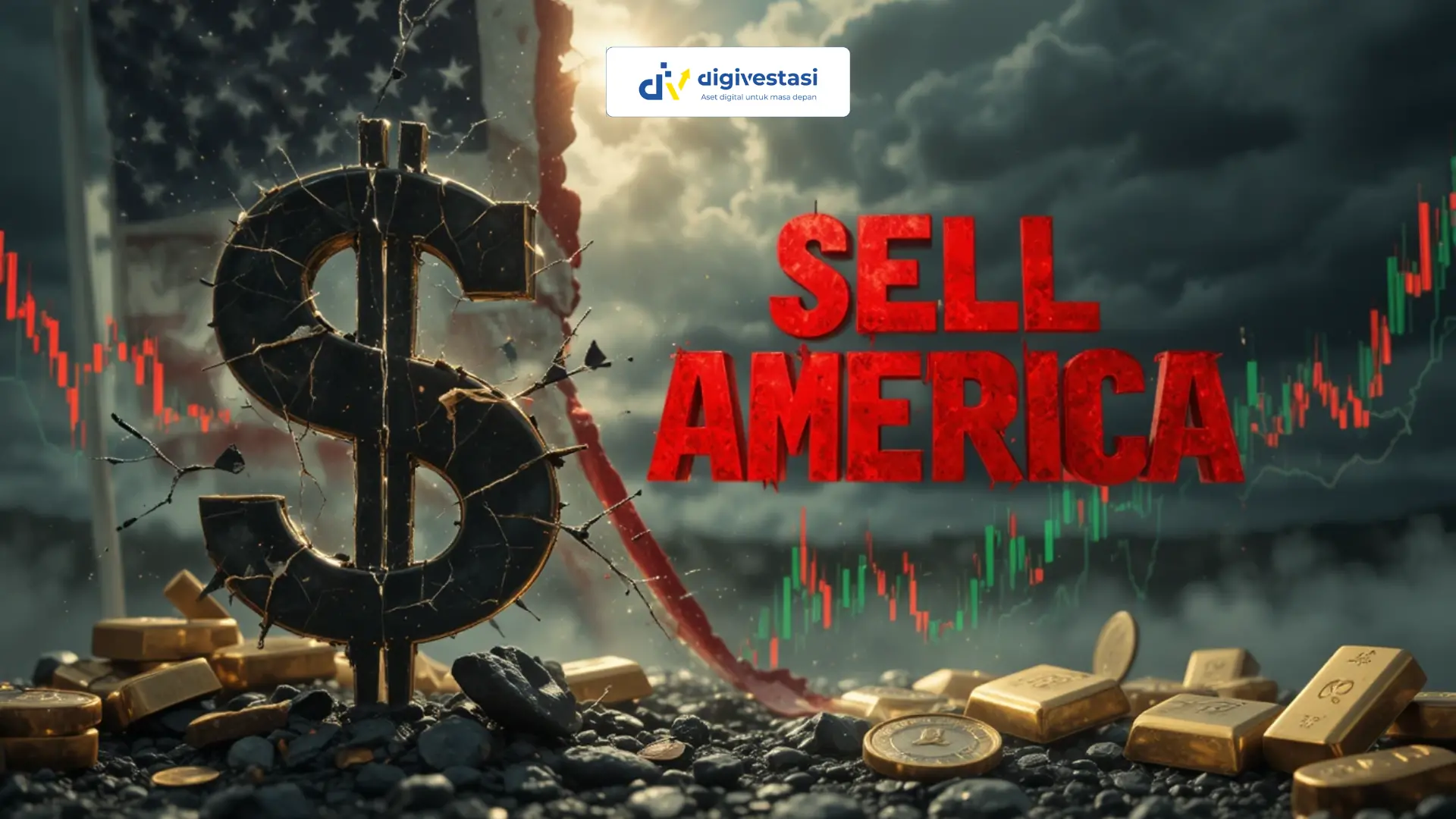
The United States is currently under mounting pressure from global financial markets, as reflected in the sharp decline of the U.S. Dollar Index (DXY). The index measures the dollar’s strength against six major global currencies—the euro, Japanese yen, British pound, Canadian dollar, Swedish krona, and Swiss franc. The weakness has emerged amid a renewed wave of “sell America” sentiment.
According to Refinitiv data, the DXY fell 0.76% to 98.641 at the close of trading on Tuesday (Jan 20, 2026). This marked the steepest daily drop since August 1, 2025, when the index slid 0.83% in a single session.
The dollar’s decline continued into Wednesday’s trading (Jan 21, 2026). As of 9:07 a.m. WIB, the index remained in negative territory, down 0.15% at 98.945.
Sell America Sentiment Gains Momentum
The current weakness in the dollar aligns with a broader shift toward risk-off sentiment in global markets. Many market participants view the recent moves as a resurgence of the “sell America” narrative, characterized by investors reducing exposure to the U.S. dollar and U.S. Treasuries, while increasing demand for safe-haven assets such as gold.
Rising political tensions between the United States and Europe over Greenland have been a key trigger behind deteriorating sentiment. Threats from the White House toward European countries regarding the future of Greenland have sparked widespread selling across U.S. assets, including equities and government bonds. This environment has also supported European currencies, with the euro and British pound strengthening against the U.S. dollar.
Market participants believe the escalation could prolong policy uncertainty and push up risk premiums on U.S. assets, prompting investors to cut exposure or hedge their positions.
Tony Sycamore, a market analyst at IG, noted that investors are shedding dollar-denominated assets due to concerns over prolonged uncertainty, strained alliances, declining confidence in U.S. leadership, the risk of retaliatory actions, and the accelerating trend of de-dollarization.
Krishna Guha, Head of Global Policy and Central Banking Strategy at Evercore ISI, quoted by CNBC International, echoed this view, stating that the pressure signals a return of the sell America theme within a broader risk-off environment.
These dynamics have triggered cross-asset volatility. U.S. Treasury prices have fallen, pushing yields higher, U.S. equities have come under pressure, and overall market volatility has increased. At the same time, gold and silver prices have risen, reflecting a shift toward assets perceived as safer amid heightened uncertainty.
Nevertheless, some market participants believe the impact of sell America could be temporary. Several analysts argue that tariff threats pose a near-term headwind for the dollar, particularly given the market’s still-heavy positioning in the currency. However, if tensions escalate into more sensitive areas such as security-related issues, risks for Europe could also rise, potentially altering market reactions.
In a broader context, the sell America phenomenon reflects a phase in which global investors assign higher risk premiums to U.S. investments, especially during periods of elevated policy uncertainty and waning confidence in economic direction. This environment can weigh on the dollar while encouraging diversification into other assets and regions.
Source: cnbcindonesia.com
What do you think about this topic? Tell us what you think. Don't forget to follow Digivestasi's Instagram, TikTok, Youtube accounts to keep you updated with the latest information about economics, finance, digital technology and digital asset investment.
DISCLAIMER
All information contained on our website is summarized from reliable sources and published in good faith and for the purpose of providing general information only. Any action taken by readers on information from this site is their own responsibility.
SHARE
VIEW


