


Saham News
JCI Today, July 27, 2026: Stock Picks and Key Market Levels to Watch
/index.php
Bisnis | Ekonomi - Posted on 07 March 2025 Reading time 5 minutes
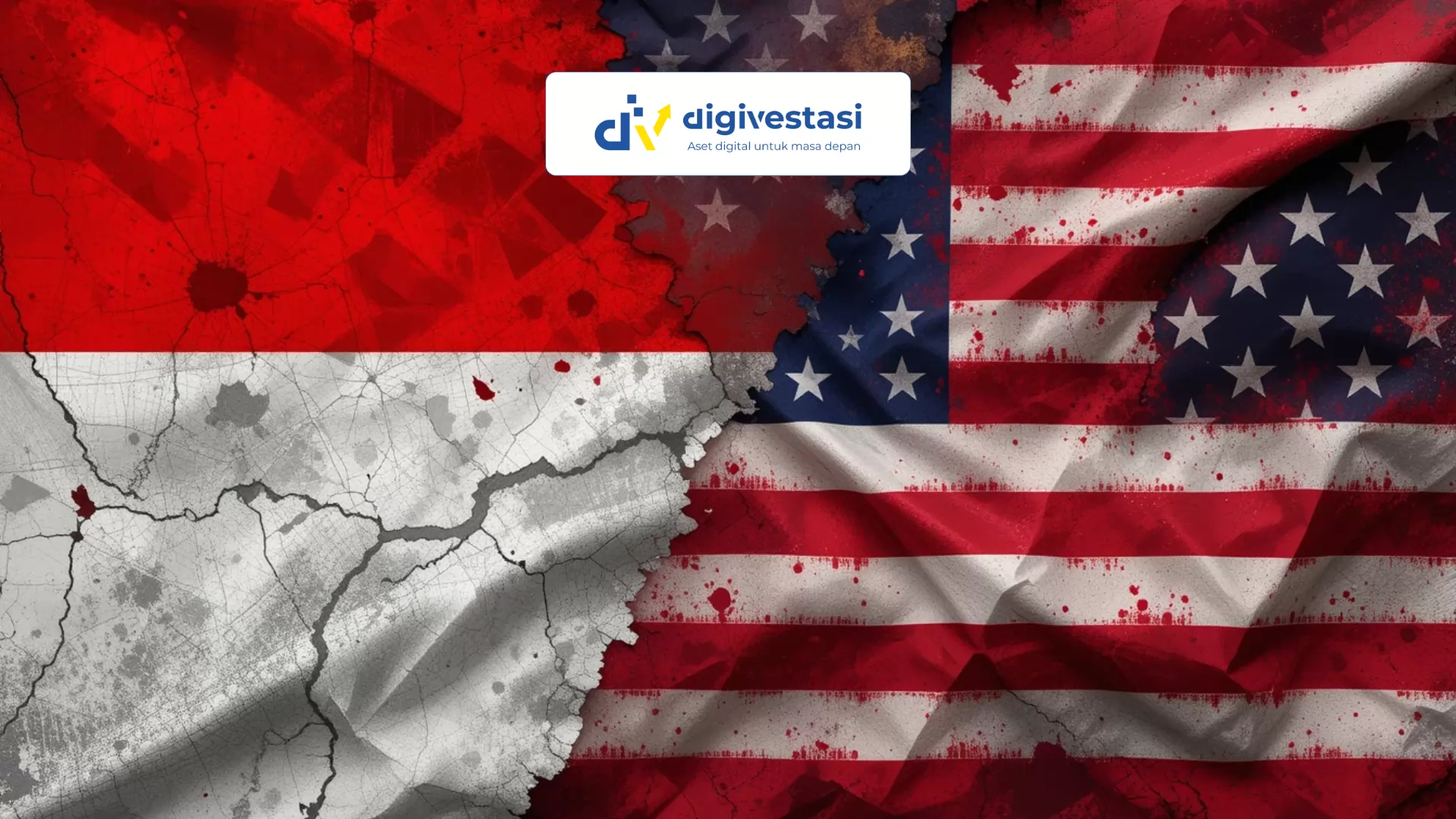
The global geo-economic landscape is undergoing a major transformation with Donald Trump’s return as U.S. President, bringing a more protectionist trade policy. His administration has imposed aggressive import tariffs, with several more under consideration.
A 10% base tariff now applies to imports from countries without a Free Trade Agreement (FTA), while strategic sectors such as semiconductors, steel, and automotive face tariffs between 25%-60%. Canada, Mexico, and China are among the hardest hit, with tariffs reaching record highs not seen since World War II.
This policy has placed many nations in a dilemma: retaliate with their own tariffs, risking escalating economic tensions, or negotiate new trade agreements that may compromise their competitive advantages. Even countries not directly affected by the tariffs will experience supply chain disruptions and economic ripple effects.
Amid these challenges, Indonesia has an opportunity to reposition itself as a key player in global supply chains by swiftly adjusting its trade and investment strategies. By capitalizing on shifts in manufacturing, Indonesia could emerge as a major export hub, potentially taking market share from China and Mexico.
To fully capitalize on these trade shifts, Indonesia must balance its macroeconomic equation: savings, investment, exports, and imports (S-I = X-M).
Simply increasing exports without corresponding investment and domestic demand stimulation could lead to economic imbalances. Therefore, Indonesia must align its trade initiatives with robust investment strategies in high-growth sectors to ensure sustainable economic expansion.
Indonesia’s approach should integrate three key elements: (i) targeted trade agreements to lower export barriers, (ii) strategic investment execution via Danantara Indonesia, and (iii) fiscal and monetary policies to boost domestic demand. A well-coordinated strategy could accelerate Indonesia’s escape from the middle-income trap.
Industries impacted by U.S. tariffs include processed metals, industrial machinery, electrical equipment, and textiles—sectors in which Indonesia is actively expanding, such as through PT Aneka Tambang Tbk. (ANTAM)’s alumina smelter projects.
However, Indonesia faces stiff competition from Thailand and Vietnam, both of which have aggressively positioned themselves as alternative supply chain hubs. Thailand offers extensive tax incentives and strategic infrastructure, while Vietnam has secured multi-billion-dollar deals with the U.S. in semiconductors and high-tech manufacturing.
Despite these challenges, Trump’s tariffs could reset global trade dynamics, giving Indonesia a chance to negotiate favorable trade agreements and expand its market access to Asia, Africa, and the European Union.
Indonesia should enhance regional economic integration through ASEAN and RCEP while considering joining CPTPP. Additionally, its entry into BRICS provides further opportunities to expand global market access.
Danantara Indonesia, with over US$900 billion in managed assets, holds a strategic role in attracting investment to priority export sectors. However, strong governance is crucial to avoid mismanagement risks that have plagued sovereign wealth funds in other countries.
Coordination between Danantara Indonesia, the Ministry of Finance, the Ministry of Trade, and the Ministry of Investment will be key to navigating these shifts. With the right strategies, Indonesia can accelerate its economic transformation, boost employment, and enhance its industrial competitiveness amid the evolving global trade landscape.
Source: cnbcindonesia.com
What do you think about this topic? Tell us what you think. Don't forget to follow Digivestasi's Instagram, TikTok, Youtube accounts to keep you updated with the latest information about economics, finance, digital technology and digital asset investment.
DISCLAIMER
All information contained on our website is summarized from reliable sources and published in good faith and for the purpose of providing general information only. Any action taken by readers on information from this site is their own responsibility.
SHARE
VIEW


