






Saham News
Best Stocks to Watch Today as IHSG Sets the Tone for Trading
/index.php
Bisnis | Ekonomi - Posted on 05 June 2026 Reading time 5 minutes
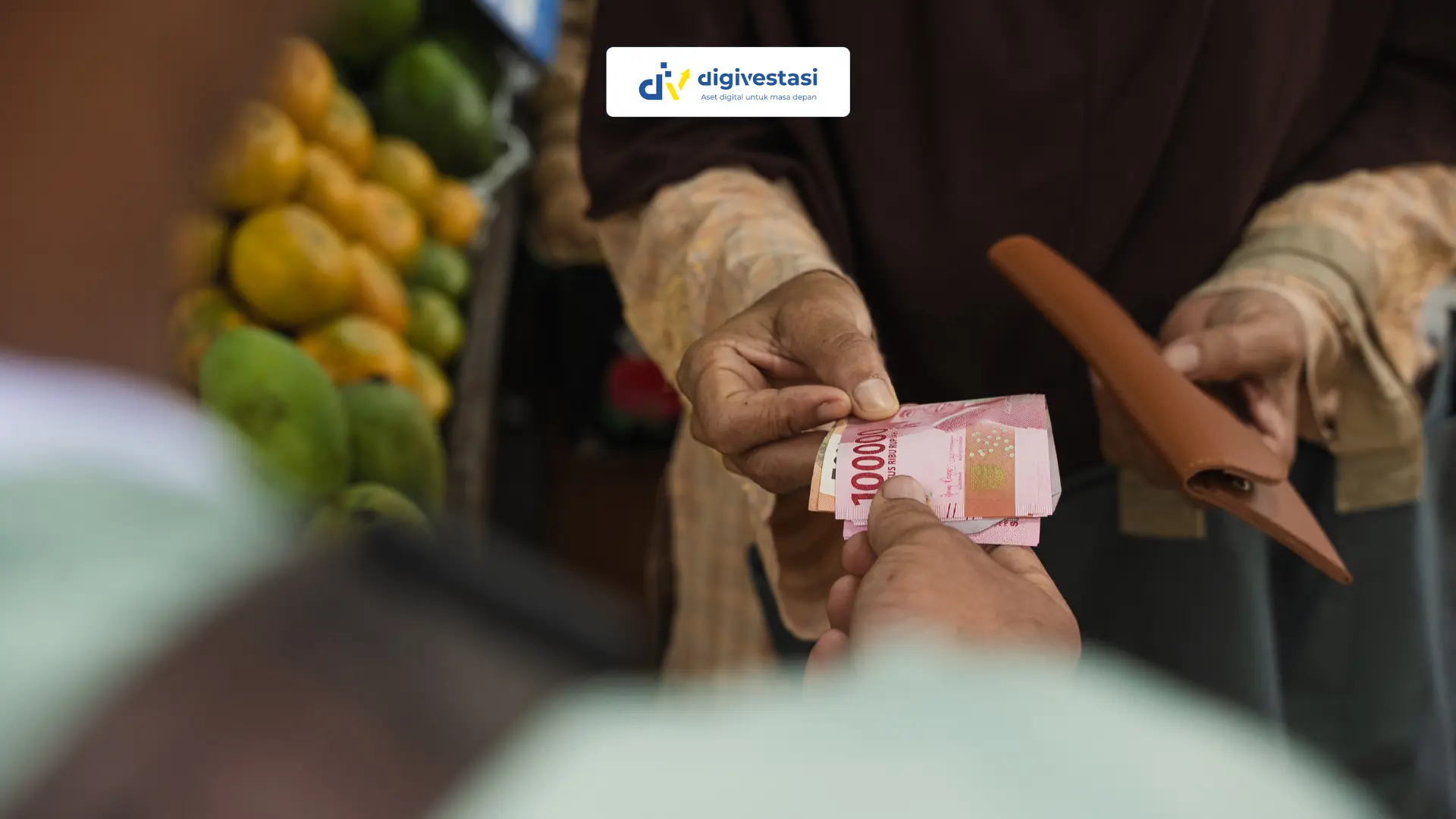
The Indonesian rupiah remains under pressure against the US dollar and is increasingly vulnerable to further depreciation. This situation poses a significant challenge for companies carrying debt obligations denominated in US dollars, as their financial burden may continue to rise.
According to Refinitiv data, as of Friday (June 5, 2026) at 11:00 a.m. WIB, the rupiah was trading at Rp18,025 per US dollar. Since the beginning of the year, the currency has weakened by approximately 8.04%, marking yet another all-time low.
The depreciation has been driven by a range of negative global factors, including geopolitical uncertainty, the possibility of rising inflation, and capital outflows from Indonesia’s financial markets, affecting both equities and debt securities.
This environment significantly increases costs for businesses, particularly import-dependent companies, as the expense of sourcing raw materials from abroad becomes substantially higher due to unfavorable exchange rate movements.
In addition, companies with liabilities denominated in US dollars and other foreign currencies are also likely to face adverse impacts as the rupiah weakens further.
The following publicly listed companies are considered particularly exposed to rupiah depreciation, based on a comparison between liabilities valued at an exchange rate of Rp17,110 per US dollar and those valued at approximately Rp18,010 per US dollar.
PT Indofood CBP Sukses Makmur Tbk (ICBP)
PT Indofood CBP Sukses Makmur Tbk (ICBP) is among the listed companies significantly exposed to foreign exchange fluctuations.
Based on its financial statements as of year-end 2025, the company’s total foreign-currency liabilities as of December 31, 2025 amounted to approximately Rp48.60 trillion using an exchange rate assumption of Rp17,110 per US dollar. At the current weaker exchange rate, the value rises to approximately Rp51.12 trillion.
The largest component consists of Global Bonds worth US$2.75 billion, increasing in rupiah terms from around Rp47.05 trillion to Rp49.53 trillion. Other US dollar-denominated liabilities, including trade payables, totaled US$46.41 million, increasing from Rp794.07 billion to Rp835.84 billion.
The remaining liabilities are denominated in currencies such as the Saudi Riyal, Turkish Lira, and Japanese Yen, with a combined value of approximately Rp754.70 billion.
As of the reporting date, the company had not implemented a formal hedging policy to mitigate foreign exchange risks.
PT Indofood Sukses Makmur Tbk (INDF)
As the parent company of ICBP, PT Indofood Sukses Makmur Tbk (INDF) also maintains substantial exposure to rupiah fluctuations.
As of December 31, 2025, total foreign-currency liabilities amounted to approximately Rp56.66 trillion using an exchange rate of Rp17,110 per US dollar. At the weaker exchange rate, the value increases to approximately Rp58.53 trillion.
The largest portion consists of long-term obligations, including Global Bonds and bank loans, totaling US$2.84 billion, which increased from Rp48.52 trillion to Rp51.15 trillion.
The company also carried short-term bank loans worth US$384.93 million, rising from Rp6.58 trillion to Rp6.93 trillion, while trade payables and other operational obligations denominated in US dollars amounted to US$55.04 million, increasing from Rp941.73 billion to Rp991.27 billion.
Non-US dollar liabilities, including Japanese Yen, Saudi Riyal, and Turkish Lira obligations, totaled approximately Rp620 billion. The company did not maintain a formal hedging policy for foreign exchange exposure during the reporting period.
PT Modernland Realty Tbk (MDLN)
Property developer PT Modernland Realty Tbk (MDLN) is another company exposed to exchange rate volatility.
By the end of 2025, total foreign-currency liabilities stood at approximately Rp5.28 trillion using an exchange rate assumption of Rp17,110 per US dollar. At the weaker exchange rate, the value increased to approximately Rp5.56 trillion.
All liabilities are denominated in US dollars. The largest portion comes from bond debt amounting to US$274.51 million, equivalent to approximately Rp4.94 trillion, with maturity scheduled for April 2027.
Additional obligations include syndicated loans totaling US$31.30 million, increasing from Rp535.54 billion to Rp563.71 billion and maturing in January 2027, along with accrued expenses of US$3.05 million, which increased from Rp52.19 billion to Rp54.93 billion.
To reduce exchange rate risk, the company utilizes derivative instruments in the form of currency forward contracts and continuously monitors economic conditions.
PT XLSmart Telecom Sejahtera Tbk (EXCL)
Within the telecommunications sector, PT XLSmart Telecom Sejahtera Tbk (EXCL) reported foreign-currency liabilities totaling Rp1.15 trillion at the end of 2025, increasing to approximately Rp1.21 trillion.
These liabilities consist primarily of trade payables to suppliers amounting to US$67.12 million, which increased from Rp1.15 trillion to Rp1.20 trillion, along with accrued expenses of US$0.22 million, rising from Rp3.76 billion to Rp3.96 billion.
Unlike previous years, the company no longer carried long-term bank loans or foreign-currency-denominated bonds as of year-end 2025.
Current exchange rate exposure mainly originates from payment obligations to suppliers related to capital expenditures. To manage this risk, management conducts regular monitoring and evaluations through its treasury function in accordance with policies approved by the Board of Directors.
PT Harum Energy Tbk (HRUM)
In the energy sector, PT Harum Energy Tbk reported total US dollar-denominated liabilities of approximately Rp24.58 trillion as of December 31, 2025, based on an exchange rate assumption of Rp17,110 per US dollar. At the weaker exchange rate, the amount rises to approximately Rp25.88 trillion, equivalent to around US$1.43 billion.
The company uses the US dollar as both its functional and reporting currency, meaning the figure reflects the group’s overall US dollar-denominated obligations.
The largest component consists of liabilities owed to non-controlling shareholders of subsidiaries amounting to US$628.97 million, increasing from Rp10.76 trillion to Rp11.33 trillion.
Another major component is long-term bank financing facilities, including portions due within one year, totaling US$616.67 million and increasing from Rp10.55 trillion to Rp11.11 trillion.
Remaining US dollar liabilities include trade payables, other payables, accrued expenses, and tax obligations totaling approximately US$191.31 million, increasing from Rp3.27 trillion to Rp3.45 trillion.
To mitigate foreign exchange risks, management applies a natural hedging strategy by aligning cash inflows and outflows from operational and financing activities within the same currency.
PT Kalbe Farma Tbk (KLBF)
As one of Indonesia’s largest pharmaceutical companies, PT Kalbe Farma Tbk (KLBF) reported total foreign-currency liabilities of approximately Rp1.83 trillion as of December 31, 2025 using an exchange rate assumption of Rp17,110 per US dollar. At the weaker exchange rate, the figure increases to around Rp1.90 trillion.
Most of these liabilities are denominated in US dollars, totaling US$75.26 million, with their rupiah value increasing from Rp1.28 trillion to Rp1.36 trillion.
The primary components include trade and other payables amounting to US$65.27 million, increasing from Rp1.12 trillion to Rp1.17 trillion; convertible loans worth US$8.52 million, increasing from Rp145.82 billion to Rp153.45 billion; accrued expenses of US$1.38 million, rising from Rp23.57 billion to Rp24.85 billion; and lease liabilities of approximately US$80,000, increasing from Rp1.41 billion to Rp1.44 billion.
Liabilities denominated in non-US dollar currencies such as the Euro, Philippine Peso, Chinese Yuan, and Thai Baht totaled approximately Rp541.90 billion.
To manage exchange rate risks, the company does not employ a formal hedging policy. Instead, it ensures adequate foreign currency availability for import requirements, closely monitors market developments, and strategically plans the timing of foreign currency purchases.
Source: cnbcindonesia.com
What do you think about this topic? Tell us what you think. Don't forget to follow Digivestasi's Instagram, TikTok, Youtube accounts to keep you updated with the latest information about economics, finance, digital technology and digital asset investment.
DISCLAIMER
All information contained on our website is summarized from reliable sources and published in good faith and for the purpose of providing general information only. Any action taken by readers on information from this site is their own responsibility.
SHARE
VIEW


