


Technology Update
Apple Is 8 Years Late? China's Royole Launched a Foldable Phone Back in 2018
/index.php
Berita Terkini - Posted on 29 April 2026 Reading time 5 minutes
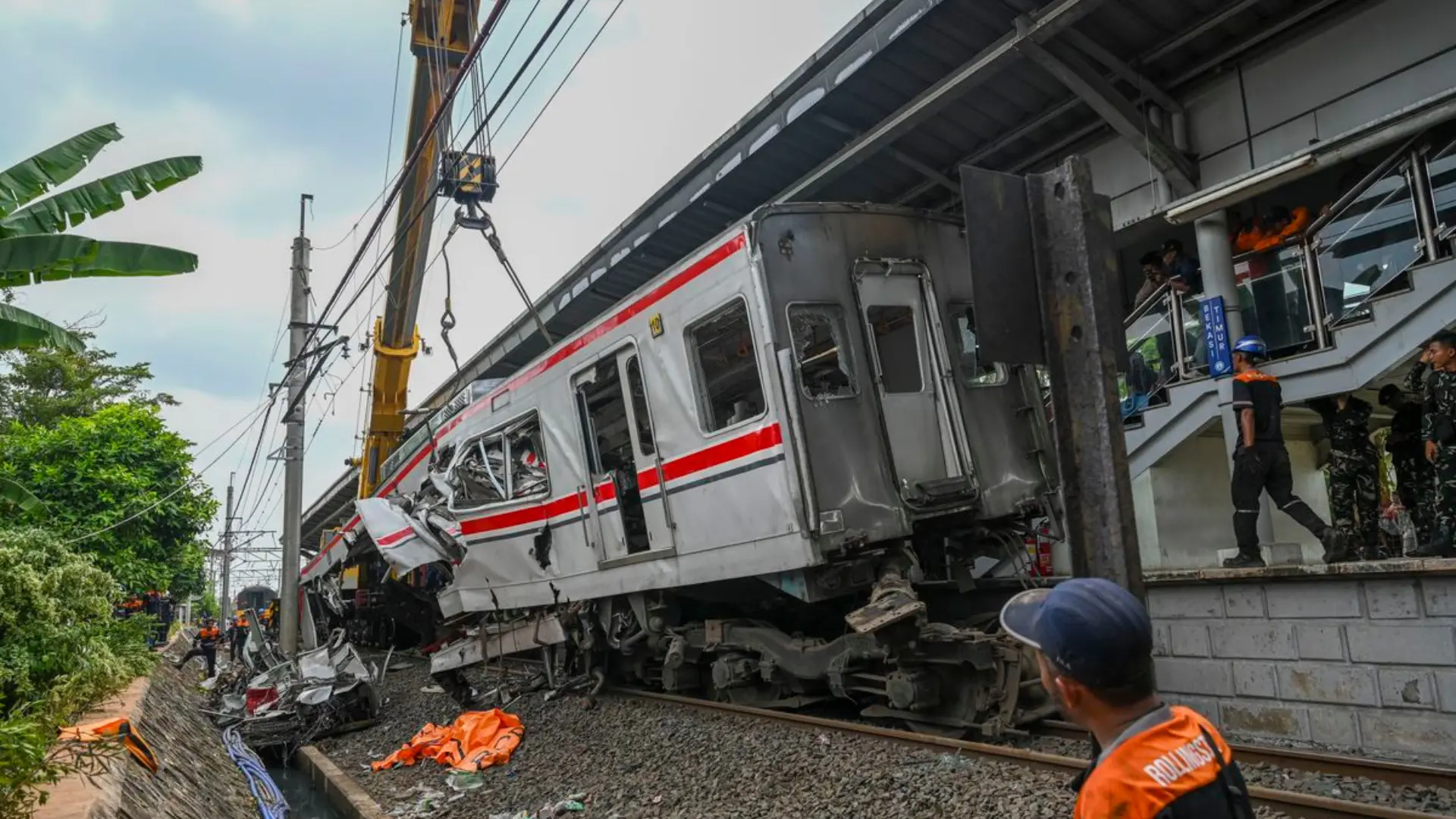
On Monday night, April 27, 2026, at 20:52 WIB, in the yard area of Bekasi Timur Station, the Argo Bromo Anggrek train collided with a stationary KRL Commuter Line train.
There are journeys home that will never reach their destination, and families waiting for dinner together that will never happen.
While expressing condolences and maintaining empathy for the victims, as a regular commuter rail user, I believe it is necessary to examine this tragedy down to its root causes.
Railway accidents in Indonesia often end with expressions of sympathy, after which the news fades and is eventually forgotten.
Yet behind every accident are individuals who left home that morning without knowing it would be their last.
Looking back, between 2007 and 2023, the National Transportation Safety Committee recorded 103 railway accidents. Derailments accounted for 62.14 percent, while train collisions made up 22.33 percent.
Collisions like the one in Bekasi are relatively rare but have far more severe consequences than derailments.
The most evident vulnerability lies in level crossings, which account for nearly 70 percent of railway incidents in Indonesia.
For comparison, the figures are 52.1 percent in the United States and 46.3 percent in Japan, indicating higher vulnerability in Indonesia.
Out of hundreds of analyzed cases, 97 percent were caused by vehicles crossing despite active signals or barriers.
The Bekasi incident follows a familiar pattern: the disruption begins at a level crossing and then spreads to signaling and inter-train communication systems.
The issue extends beyond crossings. Indonesia uses Computer-Based Interlocking (CBI), which is technically capable of preventing two trains from occupying the same block.
Most routes also use automatic block signaling, where track sensors detect train presence and adjust signals accordingly.
A critical aspect to investigate is the absence of Automatic Train Protection (ATP). Without ATP, a red signal serves only as a warning, relying entirely on the train driver’s response.
At high speeds, braking distances can reach 800 meters to one kilometer, meaning even a one-second delay can significantly affect outcomes.
Other countries have advanced further, such as Japan with its ATACS system that uses wireless communication to track train positions in real time without track sensors.
In Indonesia, the Whoosh high-speed train uses ETCS Level 2, while heavily used conventional lines like Jakarta-Bekasi-Cikarang still rely on older fixed-block systems.
As a result, decision-making remains dependent on train drivers and traffic controllers.
This approach is flawed. Of nine KNKT reports involving fatalities, 72 contributing factors were identified, with only 22 percent attributed to operator actions. The rest were linked to preconditions (39 percent), supervision (14 percent), and organizational factors (25 percent).
This indicates that focusing solely on operators is insufficient.
Further analysis shows that railway accidents involve multiple interconnected socio-technical layers, including regulators, organizations, management, field staff, and environmental factors.
No single entity operates in isolation, and assigning blame to one party is inadequate.
Important questions arise regarding the cognitive workload of controllers at busy stations, emergency procedures during disruptions, and decision-making authority between operators sharing the same tracks.
In a January 2026 report, KNKT Chairman Soerjanto Tjahjono highlighted four key issues: maintenance backlog, inadequate supervision, limited understanding of RAMS principles, and the absence of a single accountable entity for level crossing safety.
The last issue reveals the core problem: fragmented authority between central and local governments and railway operators.
This creates a situation where shared risks lack clear responsibility, a classic tragedy of the commons.
The same report noted that most safety recommendations were marked as closed, meaning they were not fully implemented or only addressed administratively without transparent independent audits.
Although Indonesia already has a comprehensive regulatory framework, gaps remain. These include the lack of a mandate for ATP implementation, absence of periodic independent audits, weak emergency protocols for shared infrastructure, and limited enforcement power of KNKT.
Other countries address these gaps through independent regulators, transparent audits, binding recommendations, and clear implementation timelines.
However, simply copying foreign systems is not sufficient due to differences in infrastructure, traffic density, and operational culture.
Indonesia’s unique conditions require a tailored, data-driven risk assessment approach.
Necessary actions include signaling modernization, wider ATP adoption, elimination of high-risk level crossings, integrated emergency protocols, strengthened KNKT authority, and clear accountability.
Ultimately, the Bekasi tragedy reflects systemic safety issues rather than purely technical failures.
Without comprehensive improvements in signaling, regulation, and governance, similar incidents may recur elsewhere.
Although technical resources and international references are available, what is needed is strong institutional commitment to prioritize public safety.
The response from the government, regulators, and operators in the coming months will determine whether this tragedy becomes a turning point or just another entry in a long list of accidents.
As public transport users, passengers need assurance of safety, and improvements must be made immediately.
Source: kompas.id
What do you think about this topic? Tell us what you think. Don't forget to follow Digivestasi's Instagram, TikTok, Youtube accounts to keep you updated with the latest information about economics, finance, digital technology and digital asset investment.
DISCLAIMER
All information contained on our website is summarized from reliable sources and published in good faith and for the purpose of providing general information only. Any action taken by readers on information from this site is their own responsibility.
SHARE
VIEW


