


Saham News
Indonesia's JCI Falls 0.27% as BYAN Becomes Biggest Drag
/index.php
Bisnis | Ekonomi - Posted on 09 March 2026 Reading time 5 minutes
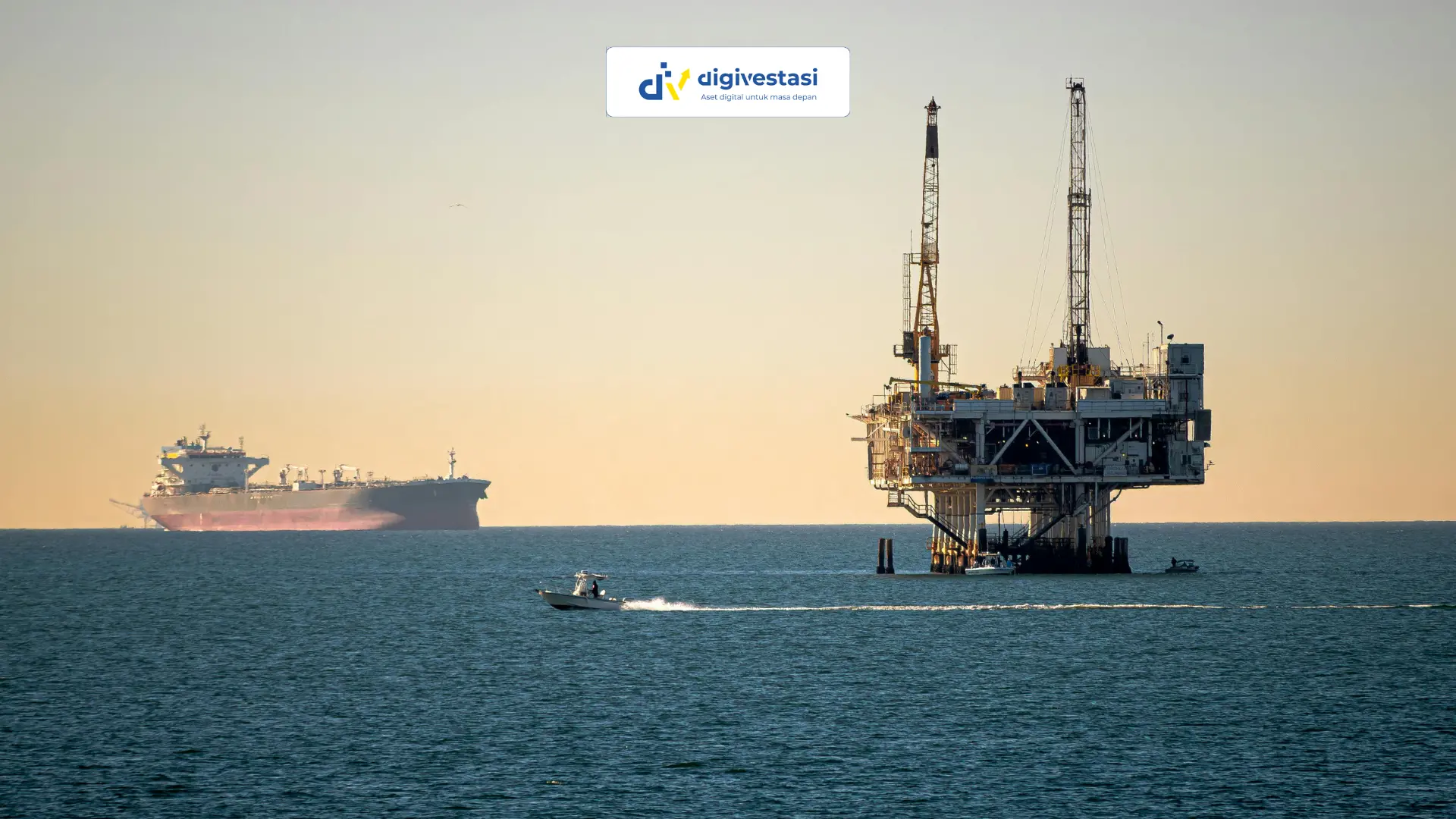
Global crude oil prices surged sharply and nearly reached US$110 per barrel during Sunday’s trading session local time. The dramatic increase was driven by the continued closure of shipping routes in the Strait of Hormuz due to the conflict between Iran and Israel involving the United States.
West Texas Intermediate (WTI) crude jumped by 20.75% to reach US$109.75 per barrel. This U.S. crude benchmark recorded a weekly gain of 35%, marking the largest increase in futures trading since records began in 1983.
Meanwhile, Brent crude also rose by 18.2% to US$109.48 per barrel. For reference, the last time oil prices surpassed the US$100 mark was during the early stages of Russia’s invasion of Ukraine in 2022.
U.S. President Donald Trump quickly responded through his Truth Social account shortly after oil prices exceeded US$100. According to him, the surge in oil prices is the cost that must be paid to eliminate Iran’s nuclear threat.
“Only fools think otherwise!” Trump wrote, as quoted by CNBC International on Monday (9/3/2026).
In addition, several countries within the Organization of the Petroleum Exporting Countries (OPEC) are currently facing emergency conditions. Oil production at three major oil fields in southern Iraq has dropped by as much as 70%. From its usual output of 4.3 million barrels per day, production has now fallen to only 1.3 million barrels per day.
Furthermore, the United Arab Emirates (UAE) has begun slowing its oil production due to the lack of available storage capacity. Kuwait, the fifth-largest oil producer within OPEC, has also started significantly reducing its production as a precaution against potential Iranian threats along maritime routes.
At present, the Strait of Hormuz has become a route that shipping companies are actively avoiding. Despite this, the passage normally handles around 20% of the world’s oil consumption. Tanker operators are reluctant to travel through the strait due to fears of becoming targets of Iranian attacks.
As a result, oil supplies are piling up because no ships are willing to collect them. Gulf Arab countries have therefore been forced to cut production because their storage facilities are reaching capacity.
U.S. Energy Secretary Chris Wright stated that the situation is expected to recover once the United States eliminates Iran’s capability to threaten oil tankers.
“Soon you will see regular ship traffic resume through the Strait of Hormuz. The current situation is indeed not yet normal and requires time to stabilize. However, even in the worst-case scenario, this disruption is likely to last only a few weeks rather than months,” Wright said in an interview with CNN.
Source: detik.com
What do you think about this topic? Tell us what you think. Don't forget to follow Digivestasi's Instagram, TikTok, Youtube accounts to keep you updated with the latest information about economics, finance, digital technology and digital asset investment.
DISCLAIMER
All information contained on our website is summarized from reliable sources and published in good faith and for the purpose of providing general information only. Any action taken by readers on information from this site is their own responsibility.
SHARE
VIEW


