


Technology Update
Apple Is 8 Years Late? China's Royole Launched a Foldable Phone Back in 2018
/index.php
Bisnis | Ekonomi - Posted on 13 January 2026 Reading time 5 minutes
Canadian Prime Minister Mark Carney is scheduled to arrive in Beijing this week for a landmark state visit. The trip marks the first time in nearly a decade that a Canadian leader has been officially received by China, signaling Ottawa’s renewed effort to mend ties with the global powerhouse.
The visit comes amid a fragmentation of global economic and political alliances. Beyond diplomatic formalities, Canada faces an urgent need to broaden its export markets to offset economic pressure from the United States (US), its largest trading partner and neighbor.
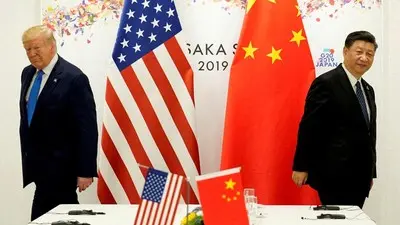
The “America First” economic agenda pursued by the Donald Trump administration has forced Carney to reconsider the foundations of Canada’s economic structure. Historically, the US has absorbed roughly 76% of Canadian exports. With growing trade uncertainty under Trump, market diversification has become essential to safeguarding Canada’s economic sovereignty.
Michael Kovrig, a former Canadian diplomat and senior adviser at the International Crisis Group, told the Guardian on Monday (January 12, 2026) that China may perceive Canada as weakened and under pressure from the Trump administration, viewing the situation as an opportunity to position itself as a more stable and pragmatic partner.
Since taking office, Carney has promoted a strategy of shifting from reliance to resilience. Currently, China accounts for only about 4% of Canada’s total exports. Ottawa aims to raise this figure, particularly in energy, agriculture, and commodity sectors.
However, the relationship remains fraught with challenges. China has previously demonstrated its willingness to retaliate economically. After Canada followed the US in imposing tariffs on Chinese electric vehicles in 2024, Beijing responded by levying a 100% duty on Canadian canola oil and meal. Shortly thereafter, an additional 75.8% anti-dumping tariff was introduced, effectively shutting Canadian producers out of one of their largest markets.
Beyond trade tensions, bilateral relations are further strained by human rights concerns, allegations of Chinese interference in Canadian elections, and disputes involving Arctic interests.
Observers caution that Canada must remain vigilant, noting that Carney will be dealing with a government that previously detained Canadian citizens for more than 1,000 days as a form of political leverage.
Margaret McCuaig-Johnston of the University of Ottawa emphasized that while market diversification is important, strategic sectors must remain protected.
“We should stay away from any discussions involving aerospace technology, artificial intelligence, and critical minerals,” she said, pointing to numerous cases in which Canadian firms ultimately lost intellectual property and technological assets after partnering with Chinese entities.
Source: cnbcindonesia.com
What do you think about this topic? Tell us what you think. Don't forget to follow Digivestasi's Instagram, TikTok, Youtube accounts to keep you updated with the latest information about economics, finance, digital technology and digital asset investment.
DISCLAIMER
All information contained on our website is summarized from reliable sources and published in good faith and for the purpose of providing general information only. Any action taken by readers on information from this site is their own responsibility.
SHARE
VIEW


