


Saham News
IDX Revises JCI Criteria from November 2: What HSC Stocks Mean for Investors
/index.php
Bisnis | Ekonomi - Posted on 31 March 2026 Reading time 5 minutes
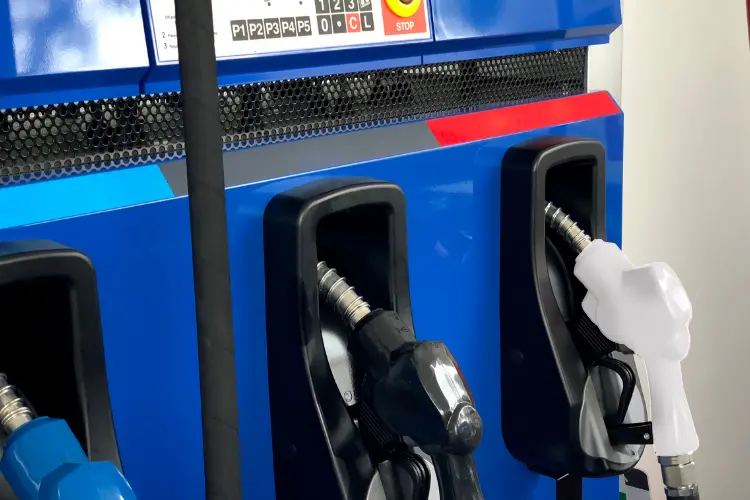
The government is preparing a policy to restrict the purchase of subsidized Pertalite and Solar fuel a measure that has not arrived without cause, but rather as a direct response to continuously rising global oil prices and an energy subsidy burden that has grown increasingly difficult for the state budget to shoulder alone.
This policy was born from the intersection of two realities that can no longer be ignored. On one side, global oil prices have once again surpassed the assumptions set within the State Budget. On the other, the distribution of subsidies has long failed to reach those who are most entitled to receive them. These two conditions have compelled the government to revise its approach: not by raising prices, but by controlling who is permitted to purchase subsidized fuel and in what quantities.
The official details of the restriction scheme have not yet been fully announced, but its general direction is already sufficiently discernible. A digital system based on QR codes is widely expected to serve as the primary user identification mechanism, while purchase volumes per vehicle will be capped. Public transportation and logistics vehicles have been cited as priority recipients a signal that this policy has been designed to protect the pulse of the people's economy, not to place additional burdens upon it.
What deserves particular note is that the prices of subsidized fuel remain unchanged for the time being. Pertalite continues to hold at approximately Rp10,000 per liter, while subsidized Solar remains at around Rp6,800 per liter. This is not a matter of price increases it is a matter of disciplining the flow of subsidies so that they no longer leak in the wrong direction.
External pressure, of course, is a factor that cannot be set aside. The surge in oil prices on the global market driven in part by geopolitical conflicts and supply disruptions has made every liter of subsidized fuel sold a heavier fiscal liability than it was before. Every increase in world oil prices translates directly into pressure on the national budget, and the government must respond without triggering fresh shocks across society.
The impact on the public will be felt from multiple directions. More controlled consumption of subsidized fuel is the primary objective. In practice, however, the risk of long queues at fuel stations remains real if the digital implementation does not function smoothly from the very first day. For those who fall into the higher-income bracket, this policy will indirectly encourage a shift toward non-subsidized fuel an outcome that has long been a stated goal of energy subsidy reform in Indonesia.
Underlying all of these measures is a dilemma that has accompanied every government for a long time: how to preserve the purchasing power of the population on one hand, while reining in a subsidy burden that continues to swell on the other. Restricting distribution represents a middle path not a permanent solution, but an interim measure that provides space for more comprehensive reform to be designed with greater deliberation.
Ultimately, this policy taking effect on April 1, 2026 marks a change in direction. The government is no longer merely holding the line on prices; it has begun regulating the flow itself. Whether this step will prove effective or instead generate new friction on the ground will depend greatly on one factor that has always been the decisive determinant of any energy policy's success: how prepared the digital infrastructure is, and how strong the coordination is at the level of implementation.
What do you think about this topic? Tell us what you think. Don't forget to follow Digivestasi's Instagram, TikTok, Youtube accounts to keep you updated with the latest information about economics, finance, digital technology and digital asset investment.
DISCLAIMER
All information contained on our website is summarized from reliable sources and published in good faith and for the purpose of providing general information only. Any action taken by readers on information from this site is their own responsibility.
SHARE
VIEW


