


Saham News
BBCA Shares Drop 2.25% as Foreign Investors Sell Rp419 Billion
/index.php
Bisnis | Ekonomi - Posted on 20 February 2026 Reading time 5 minutes
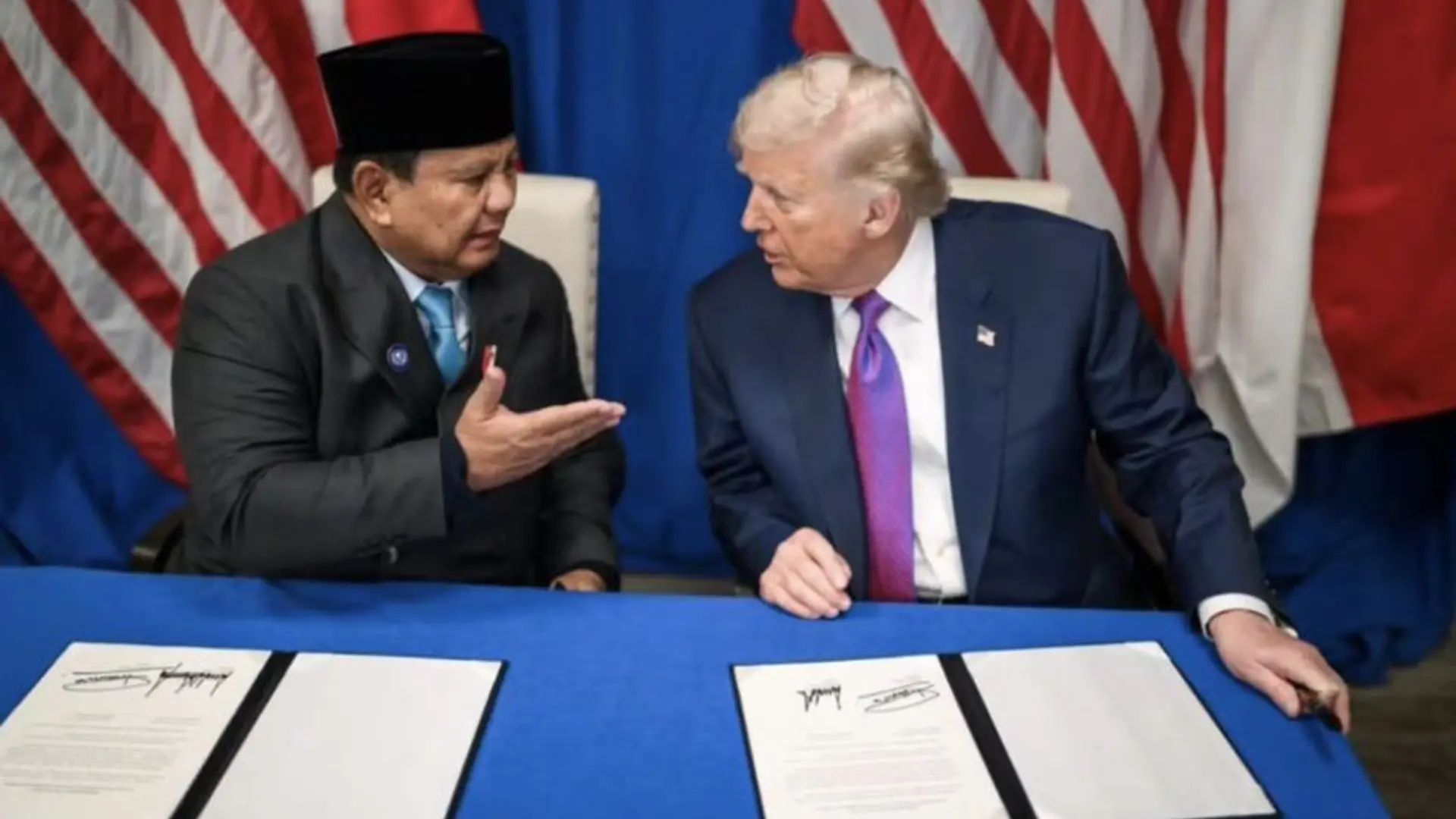
The business community has responded positively to the agreement granting a 0% import tariff on approximately 1,819 Indonesian tariff lines exported to the United States (US). The policy is viewed as providing market certainty while enhancing the competitiveness of Indonesia’s exports, particularly for key sectors that have long depended on the US market.
Sanny Iskandar, Vice Chairman of the Indonesian Employers Association (Apindo), stated that the business sector appreciates the close collaboration between the government and industry players that led to the achievement of this agreement.
He noted that the successful conclusion of the ART (Agreement on Reciprocal), which includes the 0% tariff exemption for around 1,819 tariff lines, signals that the agreement also accommodates Indonesia’s interests.
According to Sanny, the impact of the zero-tariff policy can be assessed from three main dimensions. The first is market certainty. The tariff exemption is expected to reduce trade uncertainty for businesses with significant exposure to the US market.
He pointed out that approximately 61% of Indonesia’s knitted apparel and accessories exports have been directed to the US. With a 0% tariff, the risk of declining demand due to rising costs can be mitigated, helping maintain production capacity utilization and industrial investment planning.
The second dimension relates to strengthening Indonesia’s relative competitiveness compared to its rivals. With a reciprocal tariff of 19%, Indonesia is now on par with Thailand, Malaysia, the Philippines, and Bangladesh, while China continues to face much higher effective tariffs of 30% or more across many product categories.
This situation presents an opportunity for Indonesia to expand its market share in the US, particularly in knitted apparel and accessories. Currently, China accounts for around 22% of US imports in this category, followed by Vietnam at 18%, while Indonesia holds approximately 4.9% of total US imports.
Sanny assessed that the 0% tariff serves as a significant differentiating factor for Indonesian apparel products, although competition will still depend on domestic factors such as business cost efficiency.
The third dimension concerns supply chain resilience. The 0% tariff scheme based on a tariff rate quota for garment products using US-origin cotton is considered capable of strengthening the stability of raw material supply for Indonesia’s textile industry.
Indonesia’s textile and garment industry currently imports more than US$1.5 billion worth of cotton annually, with about US$150 million, or 10%, sourced from the US. Ensuring stable raw material supply is seen as crucial for maintaining cost structures and enhancing export competitiveness sustainably.
He further emphasized that tariff exemptions do not necessarily pose a threat to domestic industries. For certain commodities that cannot yet be sufficiently supplied domestically, imports serve as essential inputs for national industries.
Commodities such as cotton, soybeans, and wheat, which are not fully produced domestically, function as intermediate inputs supporting national industries. In this context, tariff exemptions can improve efficiency and reduce domestic production costs.
With clearer tariff certainty and improved market access, the business community believes this momentum should be utilized to boost exports while strengthening Indonesia’s position within the global value chain.
Source: cnbcindonesia.com
What do you think about this topic? Tell us what you think. Don't forget to follow Digivestasi's Instagram, TikTok, Youtube accounts to keep you updated with the latest information about economics, finance, digital technology and digital asset investment.
DISCLAIMER
All information contained on our website is summarized from reliable sources and published in good faith and for the purpose of providing general information only. Any action taken by readers on information from this site is their own responsibility.
SHARE
VIEW


