


Technology Update
Apple Is 8 Years Late? China's Royole Launched a Foldable Phone Back in 2018
/index.php
Bisnis | Ekonomi - Posted on 19 January 2026 Reading time 5 minutes
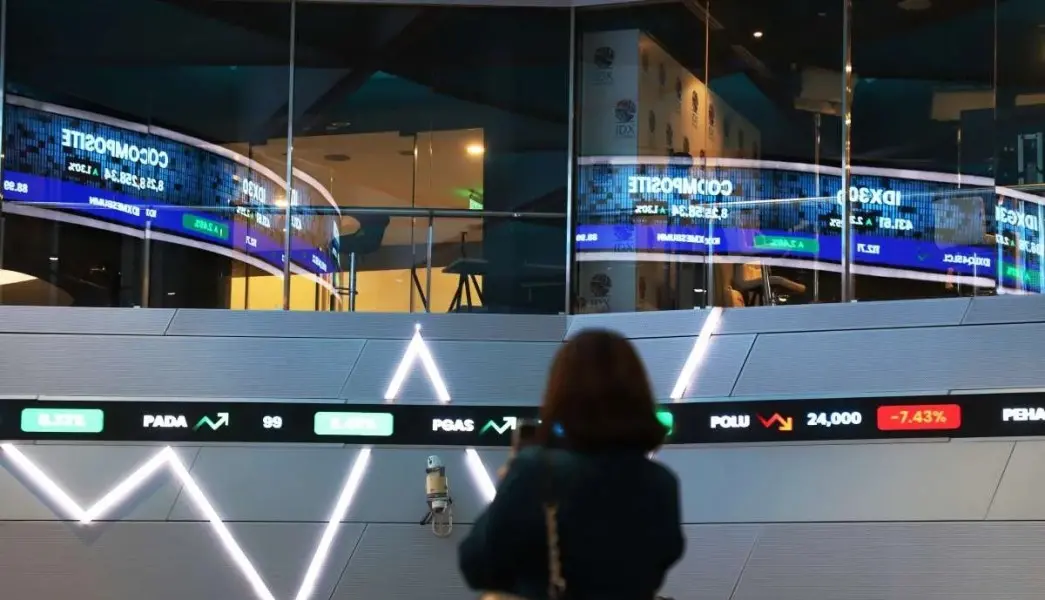
The rupiah weakened further against the US dollar, extending its downward trend at the close of early-week trading on Monday (January 19, 2026). Refinitiv data showed the rupiah ending the session down 0.33% at Rp16,935 per US dollar, marking its weakest closing level in recent history. Earlier in the morning, however, the currency had briefly strengthened by 0.15% to Rp16,850 per dollar.
Â
Throughout the trading day, the rupiah fluctuated within a range of Rp16,850 to Rp16,945 per US dollar, highlighting elevated volatility amid ongoing market pressure.
Â
Meanwhile, the US Dollar Index (DXY) was seen declining 0.20% to 99.199 at 3:00 p.m. WIB. Although a weaker dollar typically creates room for emerging market currencies to gain, the rupiah once again failed to capitalize on the global momentum.
Â
Pressure on the US dollar stemmed from rising uncertainty surrounding US trade policy. Market participants reacted to renewed tariff threats from US President Donald Trump targeting several European countries over the Greenland issue.
Â
These threats raised concerns about escalating global trade tensions and the potential deterioration of economic relations between the United States and its key European partners. Several European Union countries strongly criticized the move, viewing it as unilateral pressure.
Â
As a result, investors adopted a more defensive stance, scaled back exposure to riskier assets, and reassessed the medium-term outlook for the US dollar.
Â
Domestically, the rupiah also came under pressure from renewed foreign capital outflows in Indonesia’s financial markets. Bank Indonesia data showed that between January 12 and 14, 2026, foreign investors recorded net outflows of Rp7.71 trillion, ending a four-week streak of capital inflows.
Â
The outflows were mainly concentrated in government bonds and Bank Indonesia Rupiah Securities (SRBI). During the same period, foreign investors sold Rp8.15 trillion worth of government bonds and Rp2.64 trillion in SRBI, while still posting net purchases of Rp3.08 trillion in the equity market.
Source: cnbcindonesia.com
What do you think about this topic? Tell us what you think. Don't forget to follow Digivestasi's Instagram, TikTok, Youtube accounts to keep you updated with the latest information about economics, finance, digital technology and digital asset investment.
DISCLAIMER
All information contained on our website is summarized from reliable sources and published in good faith and for the purpose of providing general information only. Any action taken by readers on information from this site is their own responsibility.
SHARE
VIEW


