


Bussiness | Economy
Indonesia’s Economy Stays Above 5%: What It Means for Jobs and Households
/index.php
Berita Terkini - Posted on 06 December 2023 Reading time 5 minutes
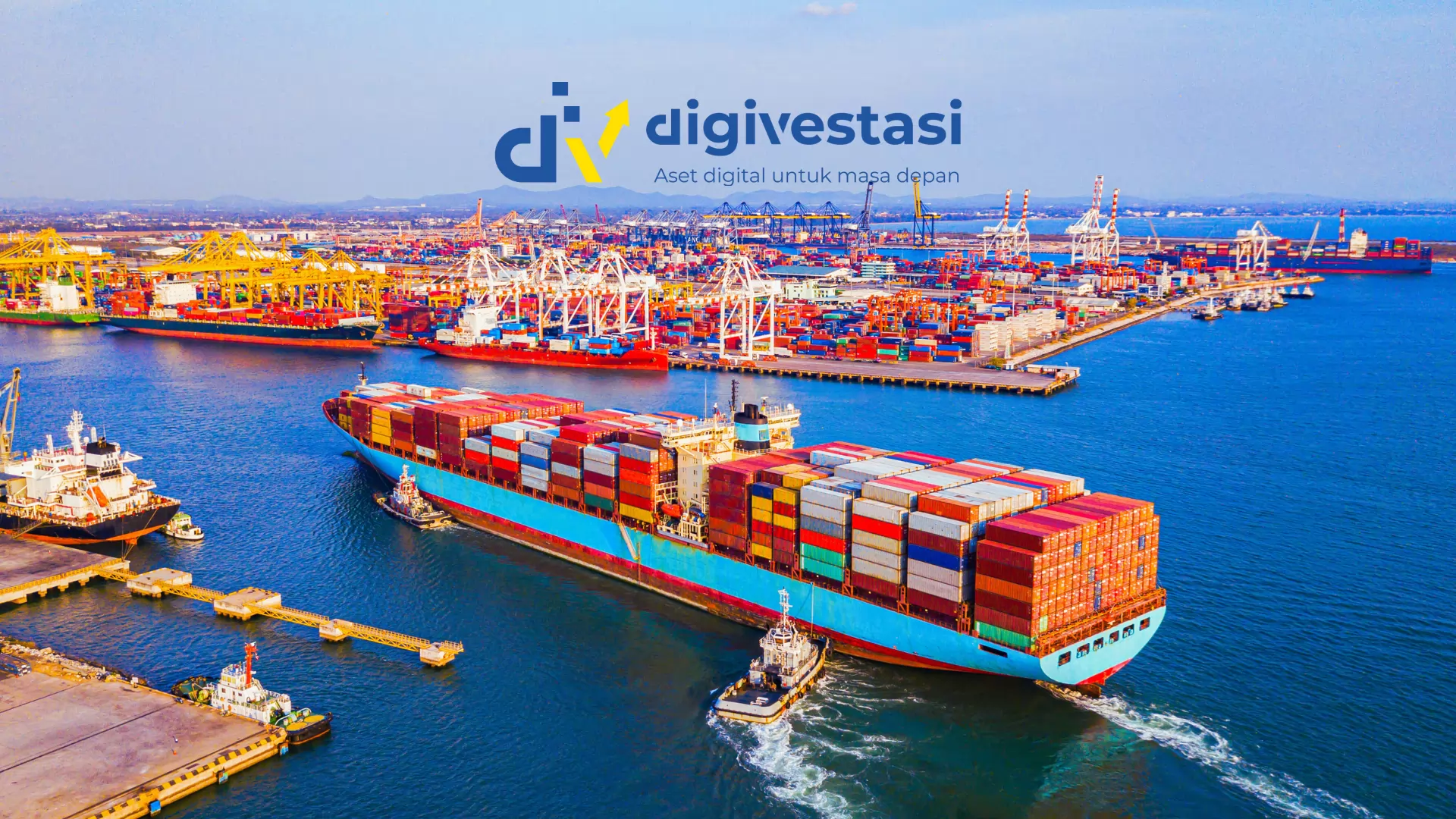
DIGIVESTASI - The European Union (EU) seems to be looking for trouble with Indonesia through international trade. The reason is, the green continent is still blocking the entry of Indonesian export products into its territory for a number of economic reasons and environmental issues. This time, the EU's anti-dumping import duty (BMAD) on stainless steel from the country.
As a result, the Indonesian government sued the EU to the World Trade Organization. BMAD is a state tax levied on imported goods sold at prices below normal value. This import tax is often applied to protect domestic industries.
The EU imposed countervailing import duties (BMPs) on stainless steel from India and India. The BMP imposed in India is 21% and India is 7.5%. Then, the BMAD imposed by the European Union on Indonesia is 10.2 to 31.5% from 2021.
Europe itself is the second largest steel producer in the world, after China. The five EU members that are the largest steel producers are Germany, Italy, France, Spain and Poland. In Europe, the steel industry is the backbone of the economy as it is closely related to various industries such as automobiles, construction, electronics, and renewable energy.
According to the European Steel Association (EUROFER), the steel industry ranks third in production value compared to other industries. The value reached 132 million euros in 2020. Cold roll stainless steel (SCRF) is better known as stainless steel.
This material is often used as a raw material for making kitchen, medical, and heavy equipment. The special staff of the Minister of Trade in charge of International Agreements, Bara Krishna Hasibuan, revealed the reason for the EU to impose BMAD on Indonesia.
He said the EU accused Indonesia of receiving subsidies from the Chinese government. The reason is because China established a steel company in Indonesia.
"For the EU, this is an unfair practice. Therefore, the EU buying Chinese products is the same as the EU buying Chinese products but the factories are in Indonesia but subsidized by the Chinese government," she said during a conversation in Timika, Central. region. Papua. as quoted by Antara, Sunday (13/12). Bara said, currently the demand for Indonesian stainless steel exports to Europe is increasing.
With the BMAD and BMP, the losses suffered by Indonesia in one year could reach 40 million euros or IDR 569.1 billion. The tightening of EU regulations on Indonesian products previously also targeted crude palm oil (CPO), cocoa, soybeans, wood, rubber products, and coffee and coffee products. This was done through the enactment of an anti-deforestation law (UU) on May 16, 2023.
With this regulation, the EU will close the export of agricultural or plantation products that are considered to be the cause of deforestation, including palm oil and coffee. Coordinating Minister for Economic Affairs Airlangga Hartarto said the anti-deforestation law could cost Indonesia up to USD 7 billion or equivalent to IDR 104.7 trillion. (assuming an exchange rate of 14,961 rupees/USD) on the export side.
He also said the policy would affect 15 to 17 million plantations in Indonesia. Returning to the issue of stainless steel, Indonesia and the EU are in the midst of a "trade war". Of course, Europe is also suing Indonesia for banning the export of nickel ore, a raw material for steelmaking, starting in 2020.
Indonesia as the owner of the world's largest nickel reserves has stopped exporting raw nickel and encouraged the metal to provide added economic value. However, this move has been met with opposition from the EU. The bloc said that Indonesia's policy to stop nickel ore exports has caused nickel prices in the market to skyrocket, thus impacting the EU and other nickel-using countries.
Europe then requested consultations with Indonesia through the WTO in 2019. Failing to reach an agreement, Europe sued in 2021. As a result, the WTO Panel stated that Indonesia's actions did not comply with WTO rules. This means that Indonesia lost the case. But after the "verdict" was announced, Indonesia filed an appeal in December 2022.
So why is the EU still looking for trade issues with Indonesia? What problems do they face? Economist and Executive Director of Segara Research Institute, Piter Abdullah, believes that Europe's decision to impose antidumping duties on stainless steel is reasonable. According to him, this effort is also not tied to the EU's political steps.
Regarding foreign trade, said Piter, all countries will try to increase their trade surplus. One solution is to reduce imports. "The trick is to apply what are called non-tariff barriers, such as linking environmental issues and so on,". He added that Europe also applies international trade rules to protect domestic industries that may be threatened by imported products.
Therefore, Piter believes that Indonesia must continue to use commercial diplomacy channels such as the WTO and various bilateral negotiations to soften the EU's heart. "On the other hand, Indonesia needs to slightly change its import policy. It is also important to put pressure on European products to ensure balance in the negotiations," Piter added. He assessed that Indonesia's import policy has been too simple and straightforward. There are almost no barriers, especially non-tariff barriers.
"Almost all products entering Indonesia today do not have any barriers," he said.
Meanwhile, Ronny P. Sasmita, senior analyst at the Indonesian Institute for Economic and Strategic Action, said Europe has three reasons for imposing antidumping duties on stainless steel.
First, the protectionist motive. Ronny said the EU has started to tighten regulations on several types of Indonesian export products. He gave the example of restrictions on CPO imports. The strengthening of regulations through anti-deforestation laws shows that the EU is protecting canola oil from the invasion of Indonesian and Malaysian CPO. Ronny explained, "The reason is that the production cost of canola oil is much higher than cooking oil from CPO raw materials."
Second, the motivation to protect the environment. It cannot be denied that the EU is the strictest region in terms of environmental protection. Therefore, Ronny believes that the EU is making it difficult for some of Indonesia's export products to enter due to widespread land destruction in the country. According to him, Europe considers that Indonesia destroys forests to plant oil palm.
Third, the small cause is the economic interdependence between Indonesia and the EU. Ronny said that the value of trade between Indonesia and the EU is not very large, even lower than the value of trade between Vietnam and the EU. Ronny's remarks are not imaginary.
Based on data submitted by Deputy Minister of Foreign Affairs Pahala Nugraha Mansury, the volume of trade between Indonesia and the EU will amount to 46 billion USD or around Rp 723.3 trillion in 2022. This figure is still far behind the value of Vietnam-EU trade which exceeds 94 billion USD or the equivalent of around 1,478 trillion rupiah.
Ronny said the low value of trade between Indonesia and the EU makes Europe not disadvantaged by limiting imports of Indonesian products. "The EU will not lose many economic incentives if it puts pressure on Indonesia, including banning some Indonesian export products," he said.
Moreover, continued Ronny, most of Indonesia's export products do not have comparative advantages. Therefore, the EU has many other options if it reduces imports of several products from Indonesia. Furthermore, Ronny said that Indonesia can only respond to the tightening of European policies by filing a lawsuit at the WTO. He considered this to be the correct procedure.
But it is just a formality. According to him, the most important thing is to increase the environmental friendliness of Indonesian export products. At the same time, Indonesia also needs to expand markets outside the EU such as Africa, the Middle East and Latin America. That way, Indonesia will not only depend on the EU.
Ronny believes that Indonesia cannot follow in the footsteps of the United States and China, which conducted a trade war under the leadership of Donald Trump. At that time, both countries raised import taxes. Ronny assessed that the level of trade between Indonesia and Europe is incomparable.
"We are not equal to Europe," he said. This is different from America fighting China."
Source: cnnindonesia.com
What do you think about this topic? Tell us what you think. Don't forget to follow Digivestasi's Instagram, TikTok, Youtube accounts to keep you updated with the latest information about economics, finance, digital technology and digital asset investment.
DISCLAIMER
All information contained on our website is summarized from reliable sources and published in good faith and for the purpose of providing general information only. Any action taken by readers on information from this site is their own responsibility.
SHARE
VIEW


